A small group carries a garlanded murti through residential streets while singing devotional songs. Anyone may walk with the group or pray as it passes. There is no fee or registration. The walk gives people on the street a brief opportunity to pause and turn towards God.
One person carries the murti. The others follow and sing softly. The group walks slowly on residential streets.
Anyone may join, watch, or pray. There is no charge.
from the first walk · 22.04.2026
Section IIWhy the walks happen
A temple is the place we go when we remember.
People visit temples in many ways. Some go every day or every week. Some go on festival days, on special occasions, or whenever they are able. Others may not visit a temple. The Walking Temple does not replace a temple visit.
As the garlanded murti and devotional singing pass through the neighbourhood, everyone on the street, whatever their own practice, has an opportunity to pause, fold their hands, and turn towards God for a moment. The group walks slowly and does not stop traffic.
The practice centres on a murti, a visible form of God used in worship. In the bhakti tradition, form (saguṇa) and the formless (nirguṇa) are understood as two ways of approaching the same God.
हृदयीं वसे विठ्ठल
Vitthal dwells in the heart.
saguṇa and nirguṇa · both became Viṭhobā.
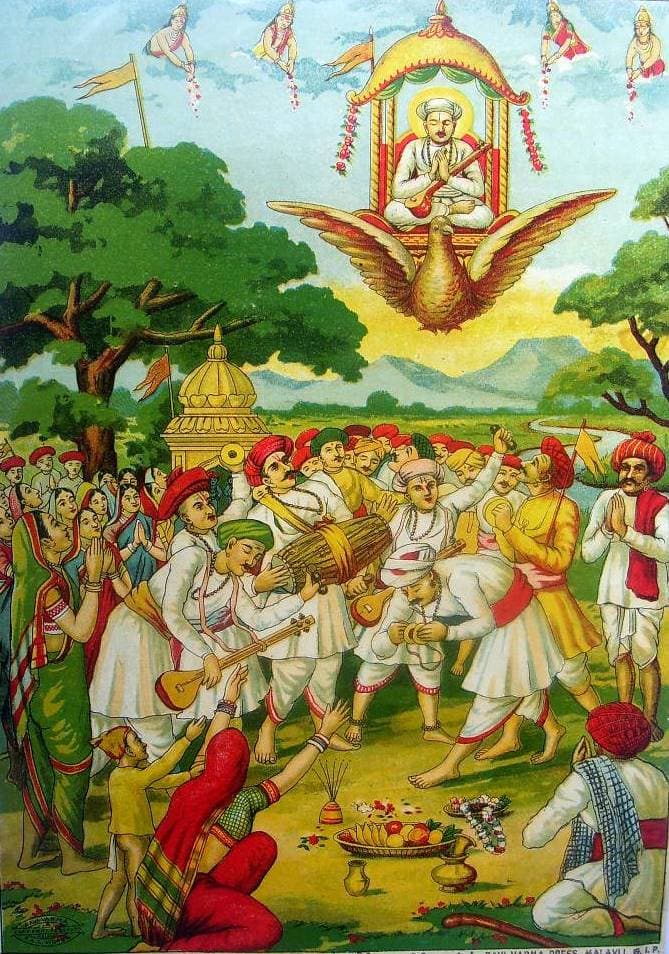
Sant Tukārām Mahārāj · abhang · 17th century Maharashtra
Sant Kabir expressed the same understanding in another image.
Water in the pot, pot in the water. Break the pot, water meets water.
Sant Kabīr · doha · 15th century Banaras
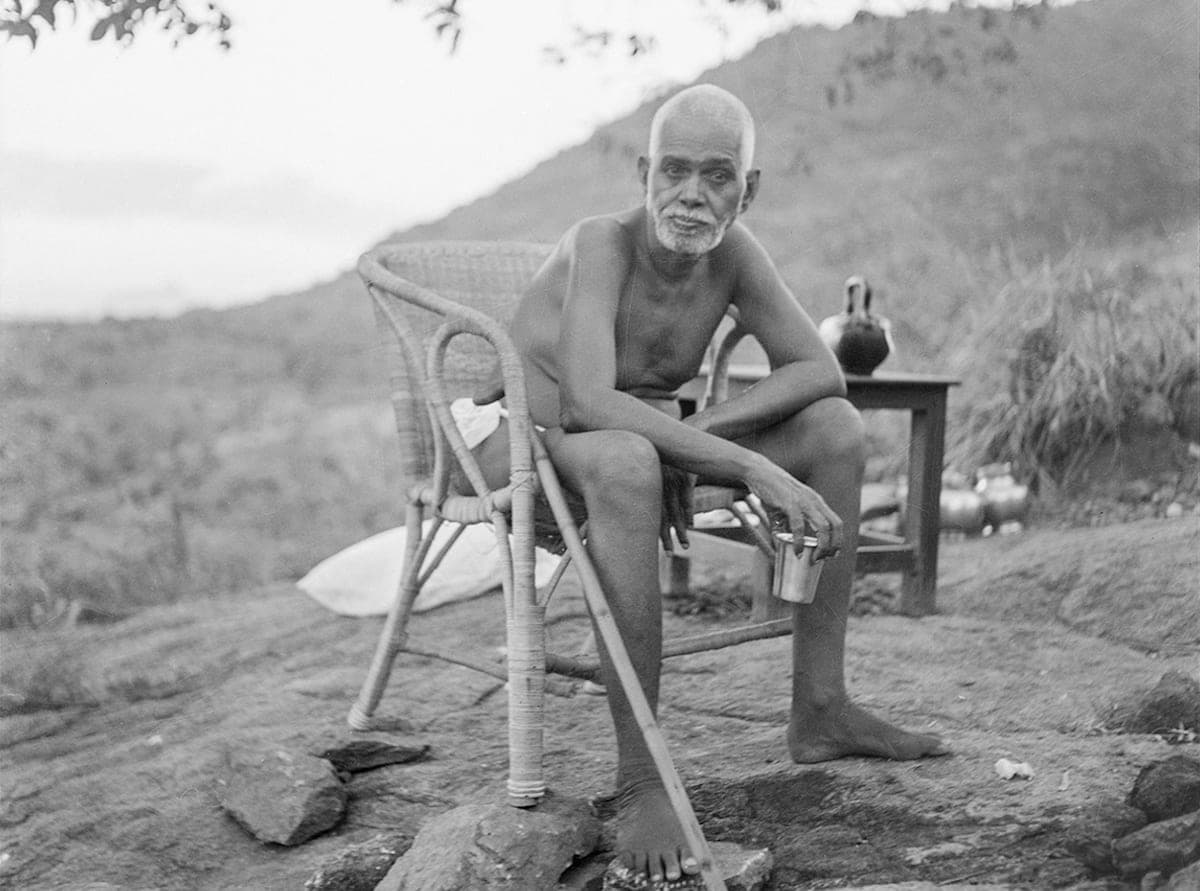
In this understanding, the murti is an outward reminder of God. Three centuries after Tukaram, Bhagavan Sri Ramana Maharshi spoke of the same presence through the path of jnana.
The outward practice helps people remember the divine presence within themselves.
This inner presence is sometimes called the hṛdaya-mandira, or temple of the heart. The murti and singing can be heard and seen on the street. Their purpose is to support a quiet moment of remembrance.
People on the street may pause, pray, or simply watch as the group passes.
Bhagavan Sri Ramana Maharshi · who placed the heart two finger-breadths right of centre, in the chest · Arunachala, Tiruvannamalai
Images I & IIThen and now
The same circle, two thousand years apart.
I
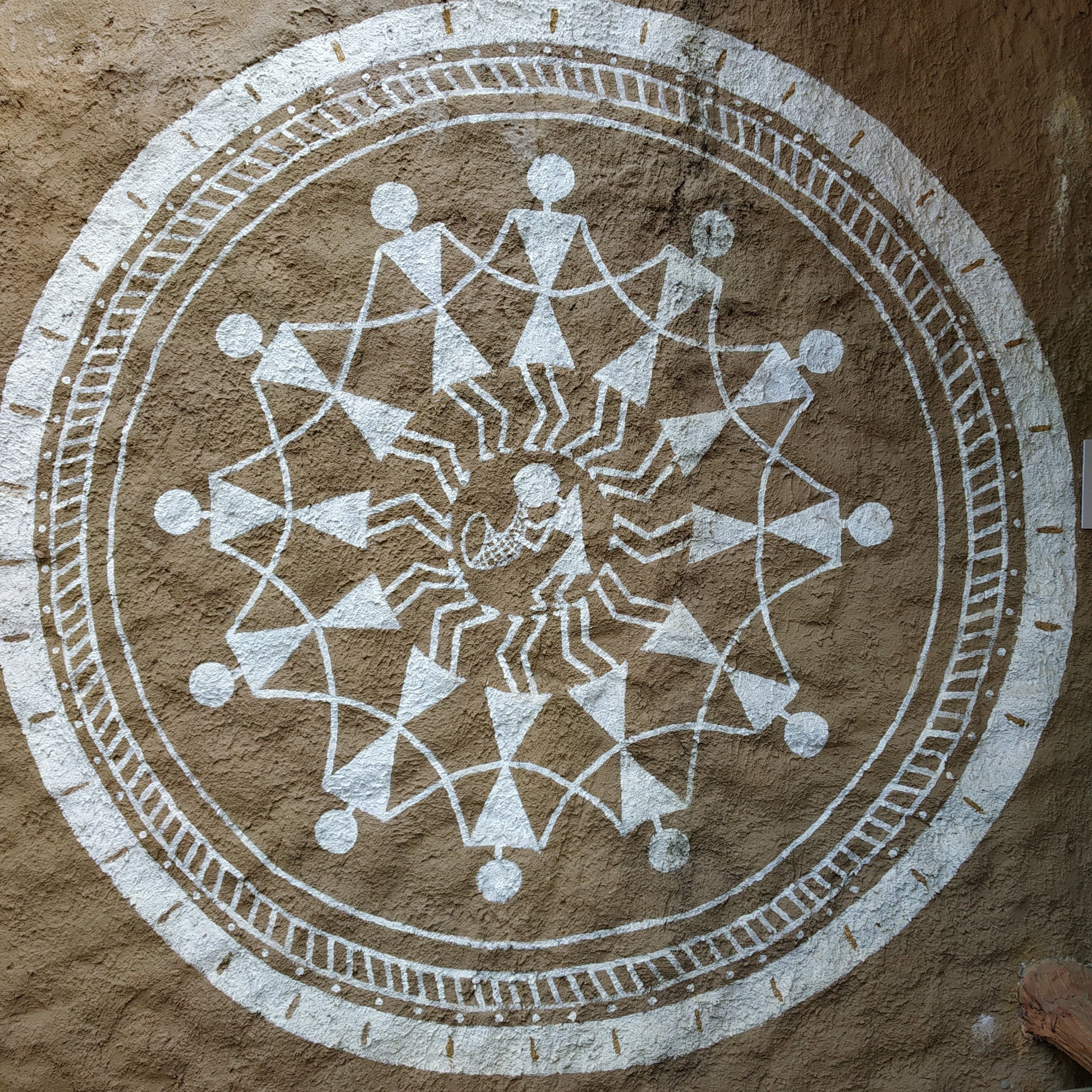
The tarpa dance · Warli wall painting
A Warli wall painting from the tribal regions of Maharashtra. A musician with a tarpa stands at the centre; villagers dance in a circle around him. By tradition, no dancer turns their back to the musician. One of the oldest images of devotional procession recorded in this country.
Wikimedia Commons · public domain
II
A walking temple · 22 April 2026
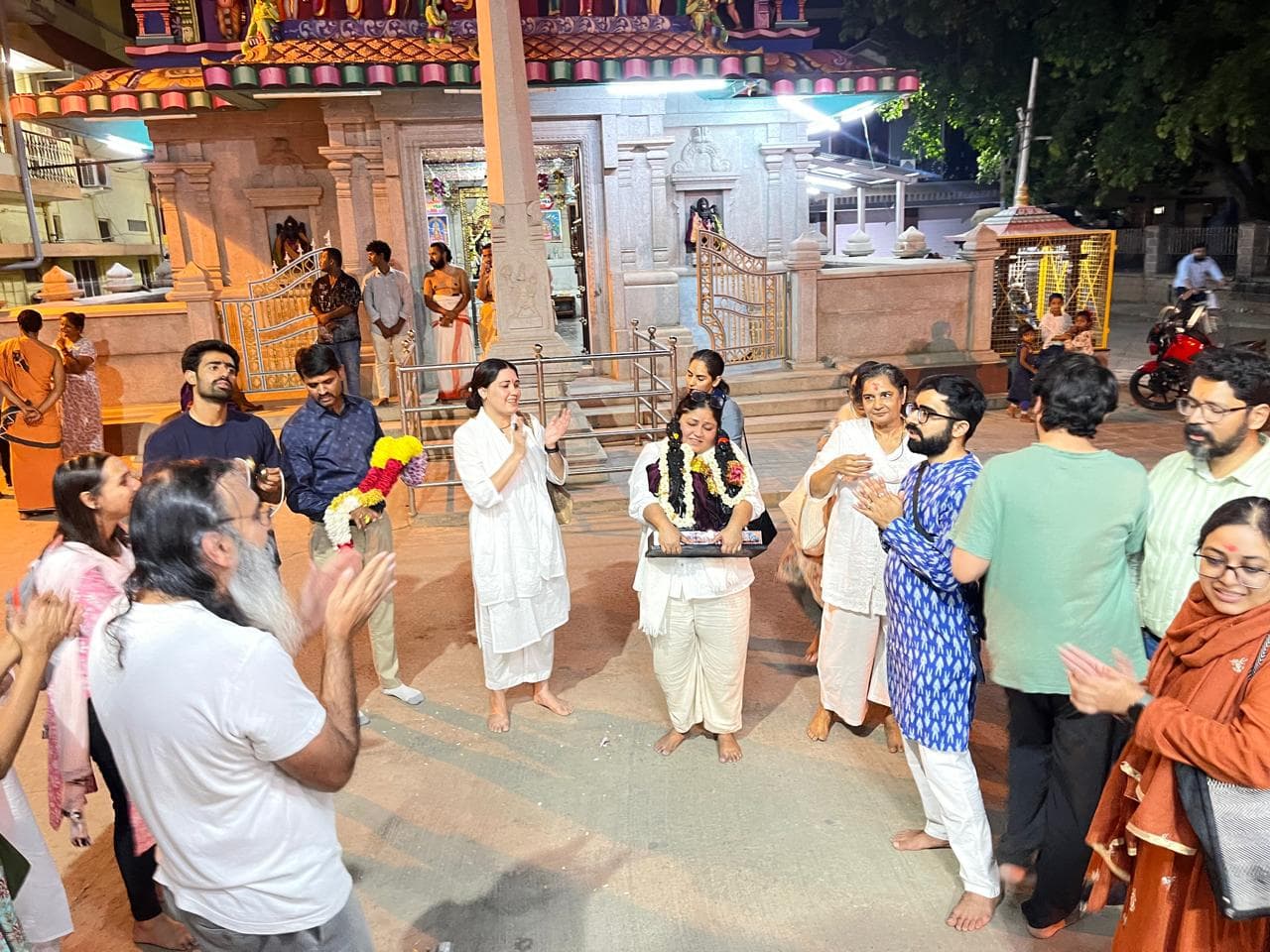
A photograph from the end of the first walk. A small group stands barefoot in a circle in front of a temple at night. At the centre, one person holds the murti in both hands. The walk has finished; the singing has come down to a hum. The same circular shape as the Warli painting, in our own century.
from the first journal entry
The walk offers a moment to remember God.
from the first journal entry · 22.04.2026
Section IVAbout the organisers
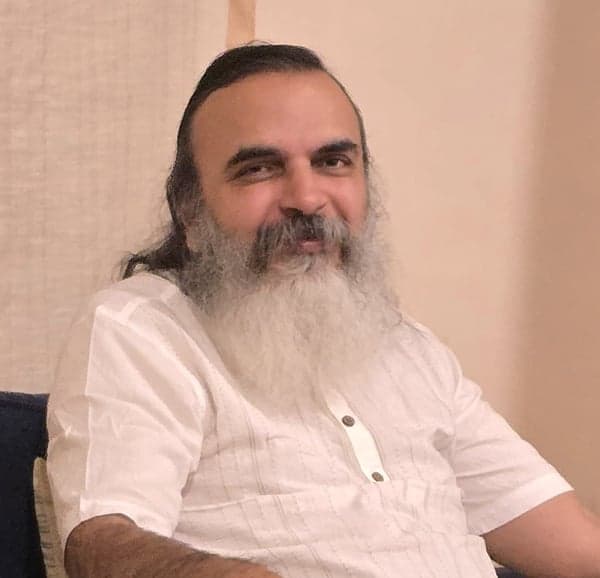
The walks are anchored by Ananta, who has been sharing satsang since 2012. Earlier recordings are at anantasatsang.org.
The practice belongs to no one. Anyone, in any city, may begin a walk.
· ananta ·
Section VExplore the site
Where to go next.
Eight ways in. Pick the one closest to where you are.
Journal22.04.2026
An account of the first walk.
Fifteen walkers set out one evening with two small garlanded murtis carried in their hands. The route ran down a busy stretch of residential road. The plan was modest: walk slowly, sing softly, end at the small temple at the corner.
What the walkers did not anticipate was the response of the street itself.