nāchū kīrtanāche raṅgī · jñāna-dīpa lāvū jagī
Let us dance in the colour of kīrtan. Let us light the lamp of wisdom in the world.
Sant Nāmdev · abhang
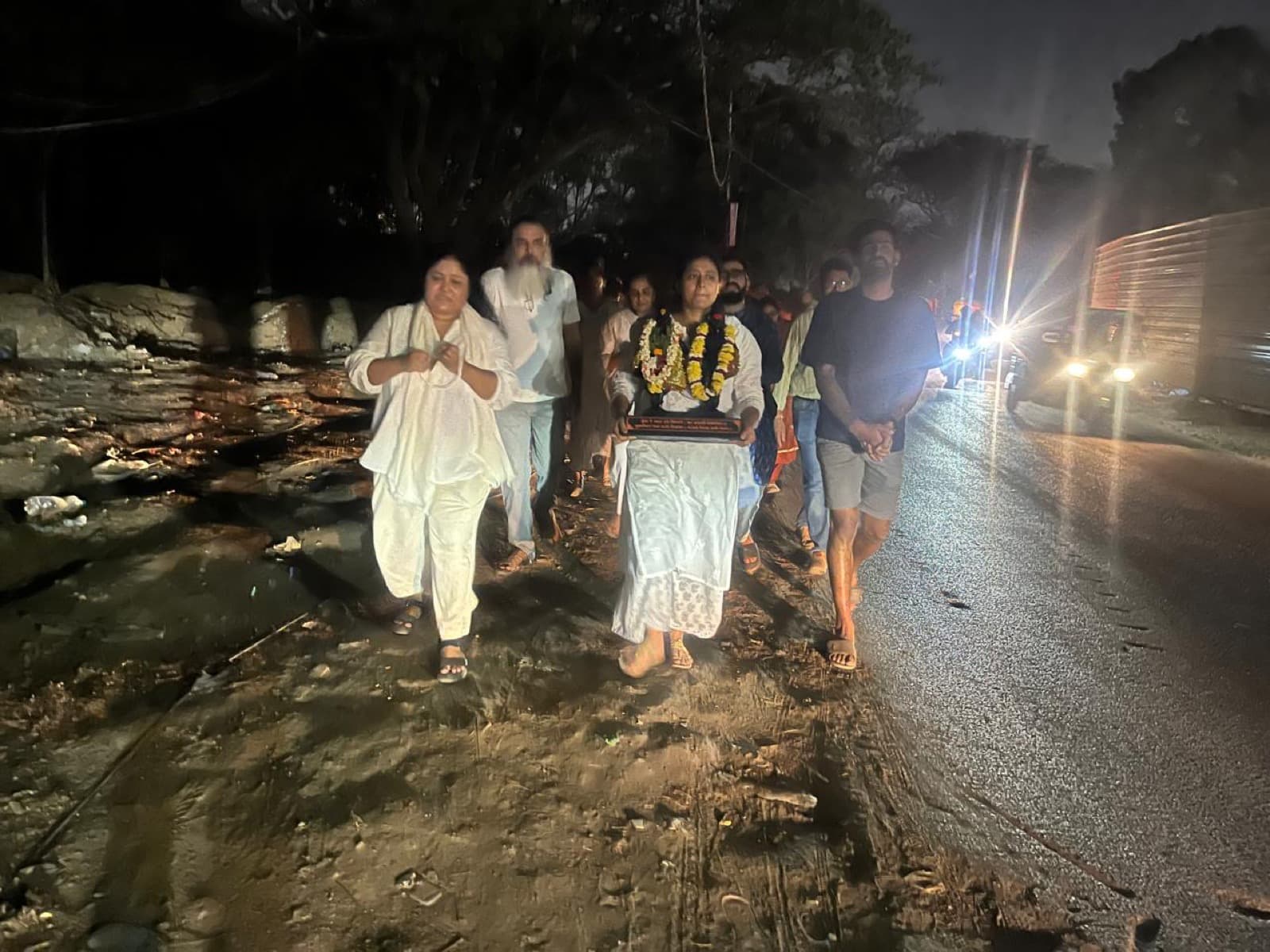
A small group of devotees carries a murti, a visible form of God, through an ordinary city street. They softly chant God’s name. They walk slower than the traffic around them. They end at a local temple, offer a brief aarti, and disperse.
i.We carry the murti.
A small group walks together on foot. A garlanded murti is carried at the centre, in the hands, passed from one walker to the next. Instruments are simple: a pair of cymbals, a drum, sometimes a harmonium on wheels. There are no microphones. There are no banners, except occasionally the locality’s name written by hand.
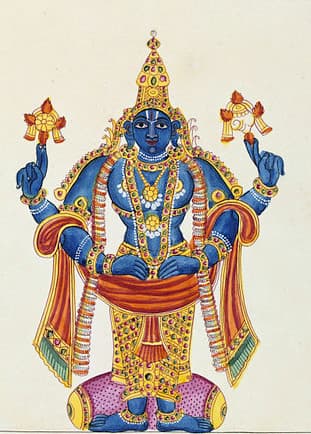
The practice does not specify whose murti. The first walk in Bangalore carried Sri Vitthal and Mata Rukmini. A group elsewhere would carry whatever form of God it has gathered around. The choice of ishta devata is the walkers’ own.
ii.This is why we walk.
On 22 April 2026, around fifteen people walked the first of these down Old Airport Road in Bangalore, in the HAL / Rustumbagh stretch. It was a small group of sangha members. Two murtis were garlanded just before the walk. There was no public invitation.
On that Wednesday evening, in the middle of traffic and telephone calls, hundreds of strangers paused. A young woman on a scooter folded her hands while the light was still green. An auto-rickshaw driver stepped out of his vehicle, bowed once, deeply, and got back in. A man in office clothes crossed three lanes of traffic on foot, between moving cars, touched the murti, and walked away without a word.
None of them had been invited. The walk gave them a brief opportunity to pause and remember God.
This is the reason for the walk. It gives people on the street a simple opportunity to stop and turn towards God. It is not a campaign or a recruitment programme.
iii.How an evening walk is conducted.
Before. The murti is dressed and garlanded at someone’s home that morning. Anyone joining for the first time is told the route and the meeting point.
Gather. Walkers meet at a quiet point a little before the start time. Greetings are brief. Phones are pocketed or set to silent.
Walk. The group walks at a gentle pace along a safe local route. One walker carries the murti at a time, and others take turns. Devotional songs are sung in whichever language is most natural to the group: Hindi, Kannada, Marathi, Tamil, English, sometimes in silence.
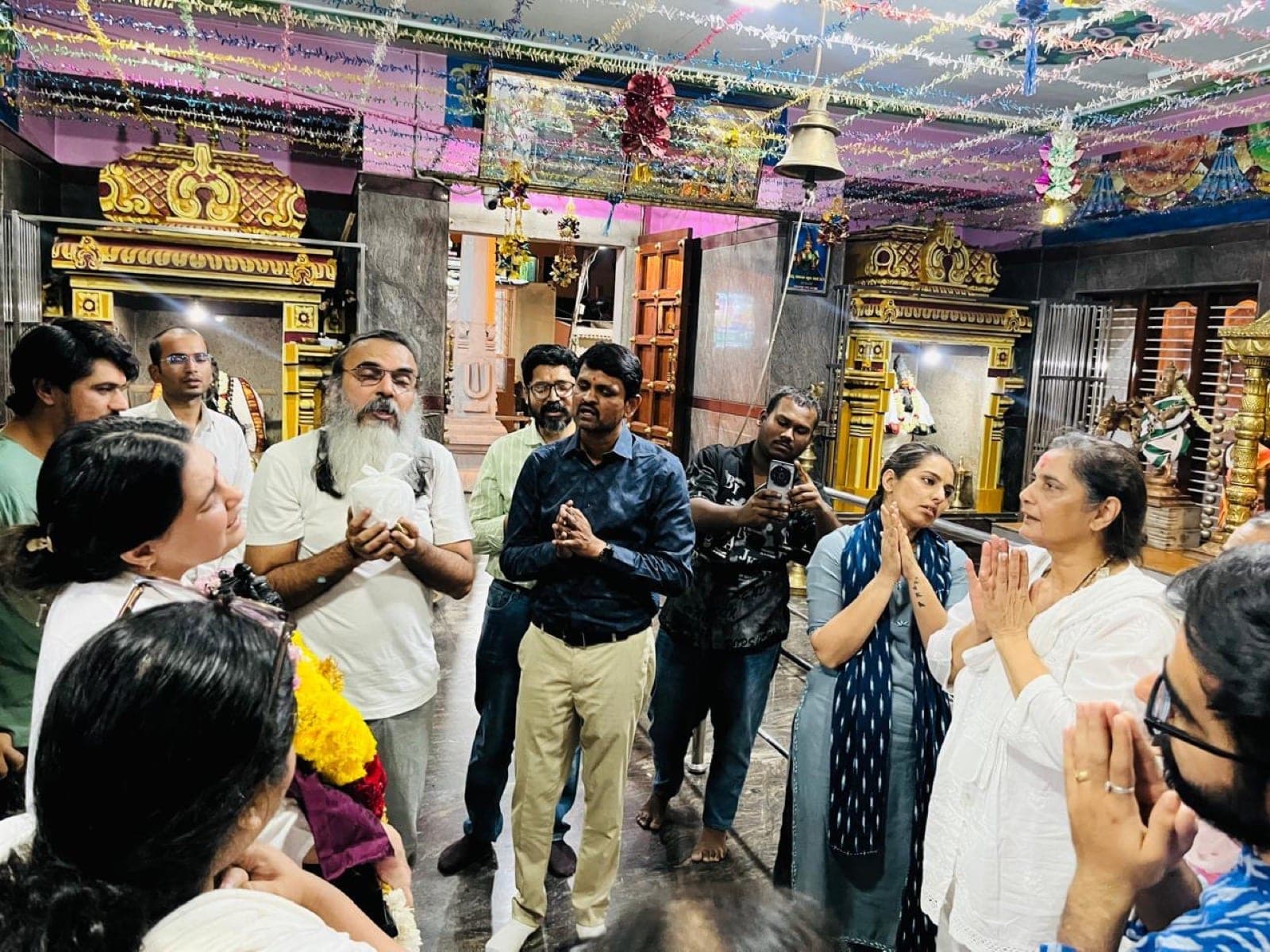
Arrive. The walk ends, where possible, at a small local temple. No one is told in advance, and no special arrangement is asked for; the walk often ends at whichever temple the evening’s route reaches. The murti is set down, a brief aarti is offered, and a few minutes are kept in silence.
Disperse. Nothing is organised afterwards. The sangha may or may not gather. People bow, embrace, and leave. One walker carries the murti home. Someone may take a few photographs.
iv.What walkers should know.
What the walk asks of you:
- Arrive a little early, so it can begin unhurried.
- Walk slowly. The pace is itself part of the practice.
- Treat the murti, and the singing, with the care you would carry into a temple.
- If you must leave before the end, leave quietly.
What is left to you:
- Singing. You may pray aloud with the group, or walk in silence.
- A small offering for the temple at the end, a flower or a fruit. Welcome, never expected.
What the walk never asks:
- Belief in any particular form of God.
- Money. The walks are free. There is no donation tin, and nowhere for one to go.
- A name on a list. There is nothing to register; you simply arrive.
v.Walks happen when there is reason to walk.
Walks do not follow a fixed schedule. A locality may walk weekly for some time, monthly, or only occasionally.
Each locality has its own WhatsApp group. The date and time are announced in that group. The locality anchor shares the meeting point and other details. This site lists upcoming walks when the information is available, but the WhatsApp group has the latest information.
vi.If you are afraid to walk.
Some people feel self-conscious on their first walk. They may worry about being seen singing in public or meeting somebody they know.
Walkers have said that this feeling became easier after they joined the group more than once. One walker wrote after the second walk:
Yesterday was different. There was great joy in singing for God on the streets. There was much less concern about who was looking or judging. I am not yet ready to walk the streets in the area where I live. Same self-image issues. But His grace is helping transcend it all.· a walker, second week ·
If you feel self-conscious, you may stand in the middle of the group and sing softly. You may also walk in silence. The presence of the sangha can make the experience easier.
More of what walkers have written about this is on the page what it feels like.
“Anyone may walk. Anyone may pray. The walks are free.”