śivaḥ śaktyā yukto yadi bhavati śaktaḥ prabhavituṁ · na ced evaṁ devo na khalu kuśalaḥ spanditum api
Śiva joined with Śakti · becomes able to create. Without Her · the God cannot even stir.
Ādi Śaṅkarācārya · Saundaryalaharī · 1
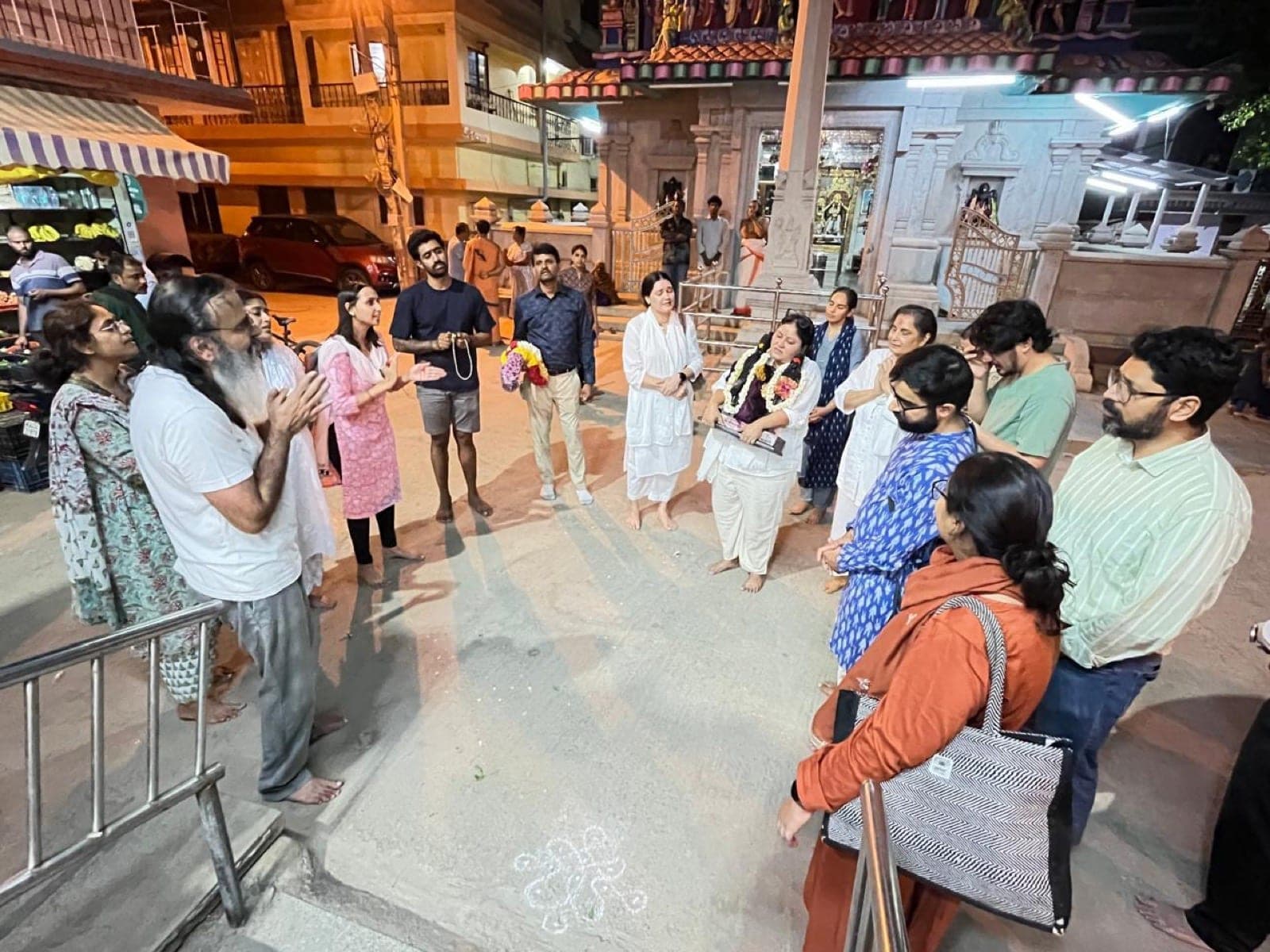
A host chooses the date, route and meeting point, and invites a small group. The host may continue as the locality anchor or share the responsibility with another walker.
i. What you need to begin
You need three things. They do not have to be bought.
- A murti someone in your group has a real relationship with. Carrying it in your hands is enough. The practice does not specify whose; the ishta devata is the walkers’ own.
- A small group. There is no minimum. Friends, family, neighbours, an existing bhajan circle or temple sangha. You do not need a big crowd. Past walks have been around fifteen people.
- One street and one evening. A route you know well, which is safe at the chosen hour and allows the group to walk together. Where possible, end at a local temple that can receive the murti.
ii. What a host actually does
- Walk the route once, alone, the week before. Notice the cars at the bus-stop, the dog that lives by the bakery, the temple’s evening pujari. This will help you plan safely.
- Choose a date, route and time. Evenings are usually convenient, but mornings can also work.
- You make a small group. A WhatsApp group is the simplest. The walk is called in that group, and so is the one after it.
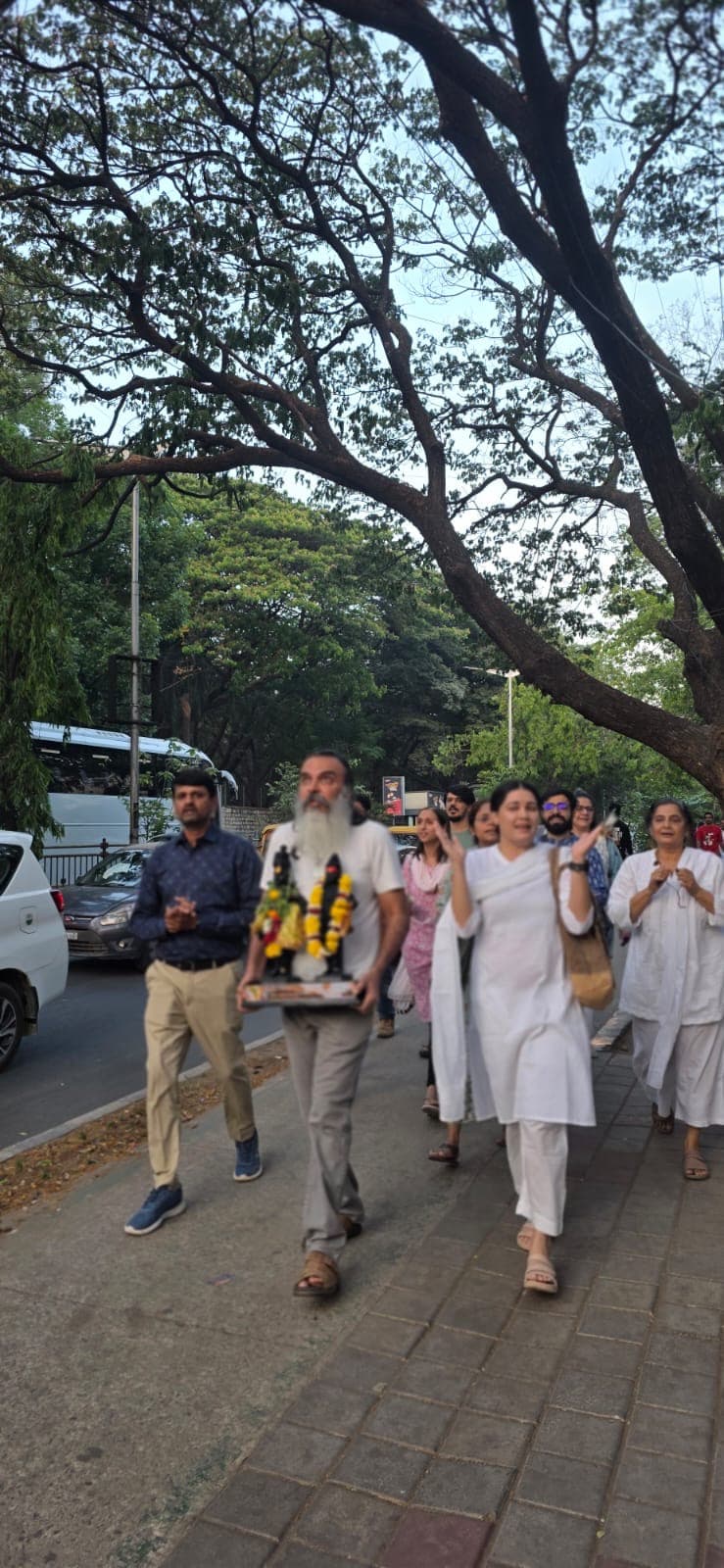
- You carry the murti, or ask a devotee to carry it. You sing devotional songs in whatever tradition is yours.
- You walk quietly. You do not collect money. You do not sell anything. You do not advertise.
- Afterwards, if you wish, you can take a few photographs and send them along for the Journal. It is not required; many walks are not recorded at all.
iii. What hosting is not
- It is not a franchise. There is no fee or application. Each locality manages its own walk.
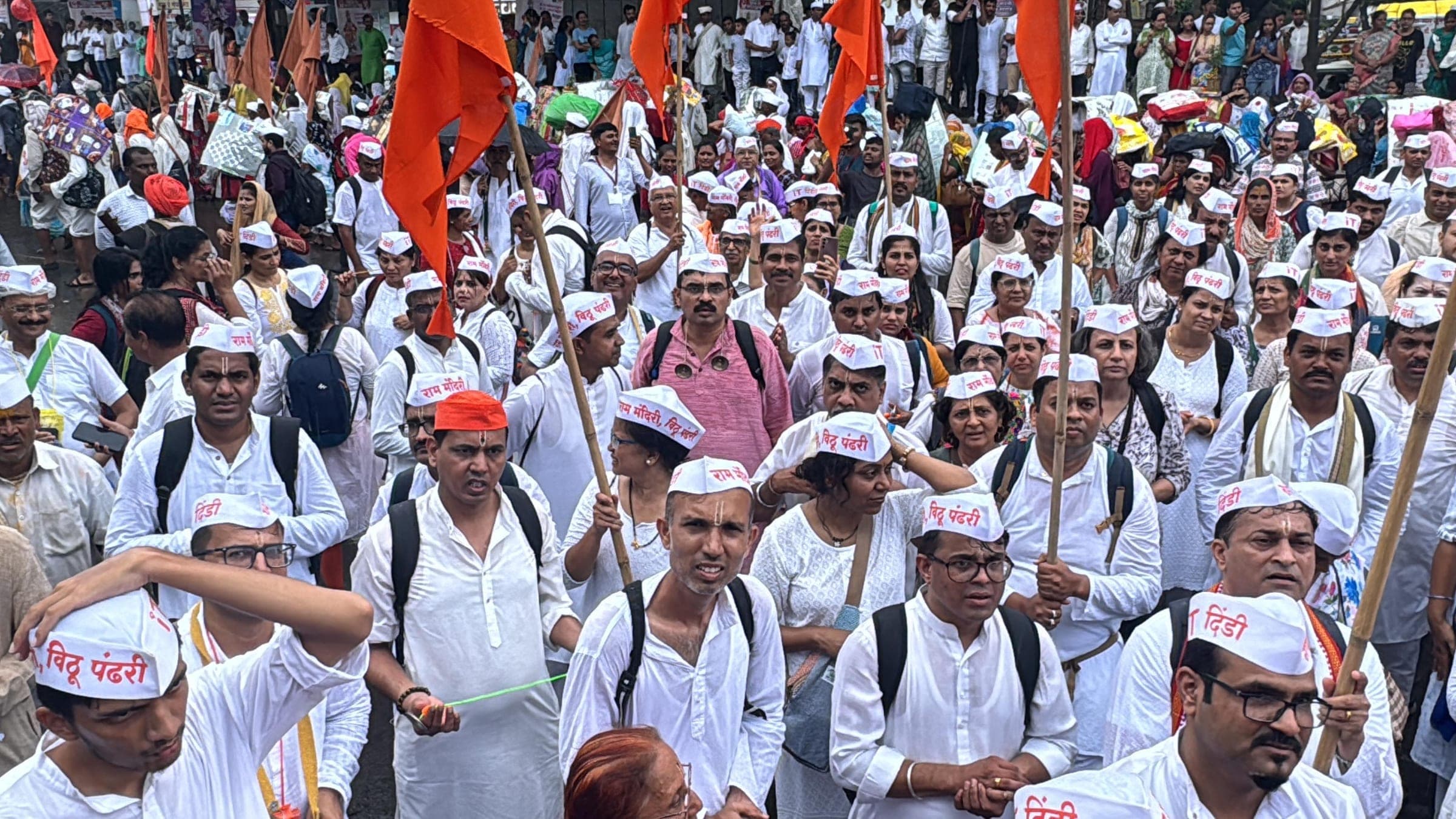
- It is not a recruitment drive. The strangers who pause as the walk passes are not asked to follow, join, or give anything. They are not on a list afterwards.
- It is not a performance. There are no microphones, stages or camera crews (phone footage from walkers is enough). If the walk becomes a performance, it has stopped being a walking temple.
- It is not a competing brand. The Walking Temple name is not ours to own. You may use it, modify it, or call your walk something else entirely. We do not register trademarks and we will not enforce one against you.
iv. If you would like guidance
If you are thinking of hosting a walk in your city, especially the first one in your locality, you may write to us before you plan it. We can answer questions and share what we have learned from the walks held so far.
You may also begin without writing to us. If you later share the details, we can add your locality to the site.
“No permission is required. An evening and a few willing hands are enough.”