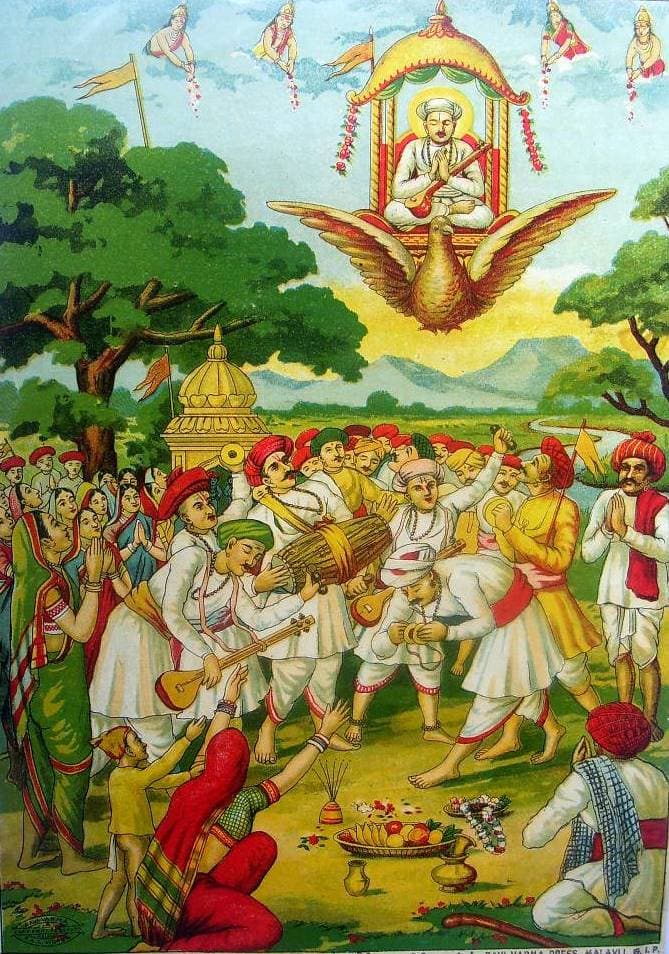
bolāvā viṭṭhala · pahāvā viṭṭhala · karāvā viṭṭhala jīva-bhāva
Speak Vitthal. See Vitthal. Make Vitthal the very substance of the living soul.
Sant Tukārām · abhang
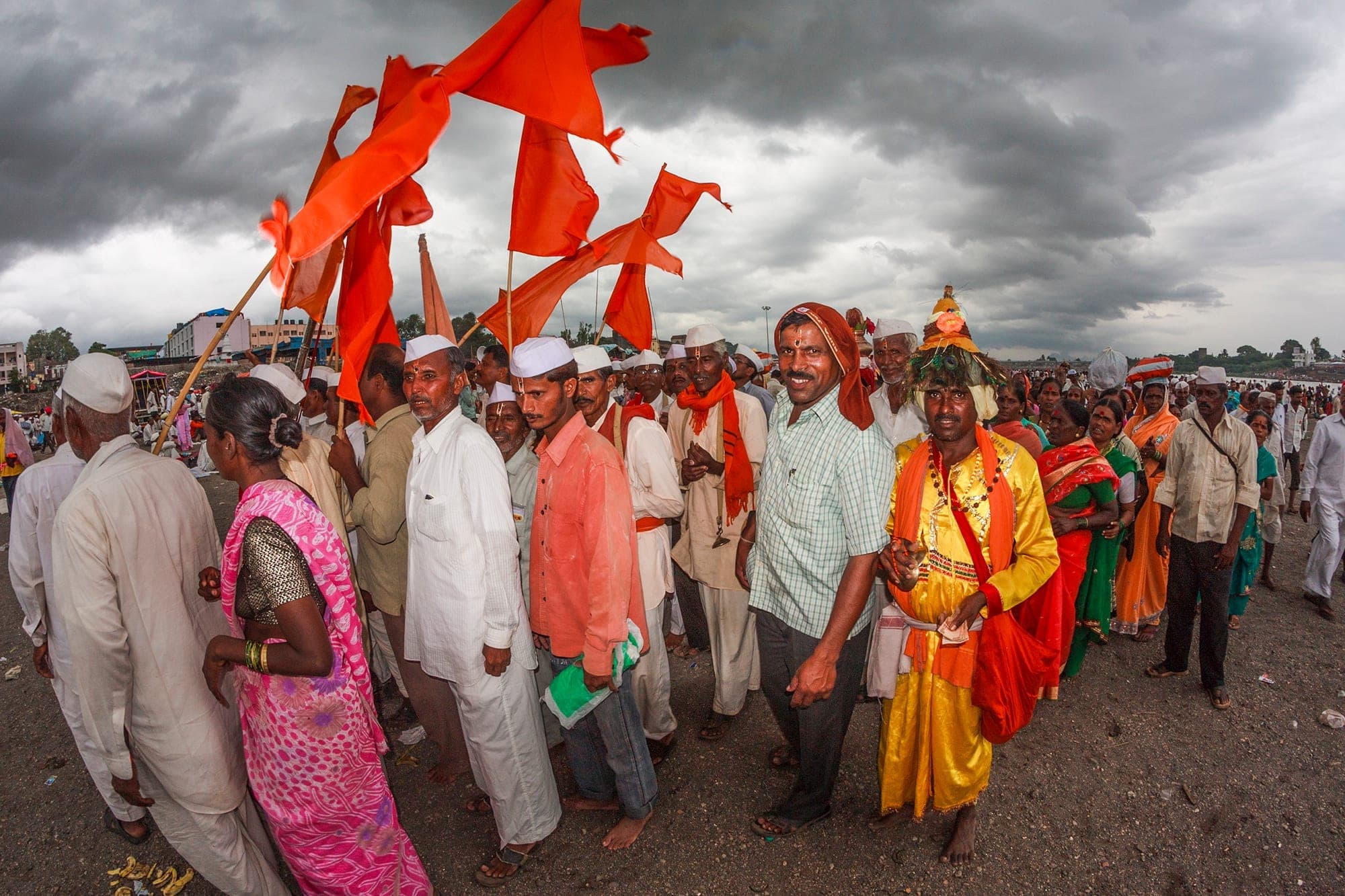
A small group walks through a city, carrying a murti and singing devotional songs. Forms of walking devotion have been practised in India for many centuries. The Walking Temple continues this practice in a local and simple form.
i.The Varkaris of Maharashtra
The Walking Temple is especially influenced by the Varkari tradition of Maharashtra. The word refers to one who undertakes the pilgrimage. The sampradāya is at least seven centuries old. Its present-day palkhi procession, given its institutional shape in the early nineteenth century, carries lakhs of Varkaris on foot to Pandharpur each year, to the temple of Bhagavan Vithoba and his consort Mata Rakhumai, singing abhangs, or devotional verses, as they go. The palkhi of the thirteenth-century saint Sant Dnyaneshwar Maharaj leaves from Alandi. The palkhi of the seventeenth-century householder-saint Sant Tukaram Maharaj leaves from Dehu. They converge on Pandharpur on Ashadhi Ekadashi, in the rains.
The walkers organise themselves into dindis, small groups of a hundred to a few hundred, each with its own leader and its own singer. The tutari is sounded to call the dindi to walk at dawn. Within a dindi, only one abhang is sung at a time. Newcomers carry a small book of the verses while walking, until they have learned them.
Sant Tukaram was a householder, a peasant and a trader by his own description, not a renunciate. Before him, Sant Namdev, Sant Janabai, Sant Eknath, and Sant Chokhamela had been writing devotion in plain Marathi for centuries. They included women, labourers from oppressed castes, householders and working men. Brahminical orthodoxy held that a Shudra had no right to compose scripture. Tukaram Maharaj’s manuscripts were famously thrown into the Indrayani river. He kept writing in the language his neighbours spoke. The verses are still sung, in that same Marathi, by Varkaris walking today.
When our first walk in Bangalore, on 22 April 2026, carried Sri Vitthal and Mata Rukmini, it did so with respect for the Varkari tradition and its centuries of walking devotion.
Like the Varkaris, we walk in a small organised group, carry a murti and sing the Name aloud. There are also clear differences. The Wari is an annual pilgrimage to Pandharpur. Our walks happen locally, at different times, and usually end at a temple in the same neighbourhood.
नाचू कीर्तनाचे रंगी । ज्ञानदीप लावू जगीं ॥
Let us dance in the joy of kirtan; let us light the lamp of knowledge in the world.
Sant Namdev Maharaj · Namdev Gatha
ii.The Sankirtan of Gauda
Where the Varkari walks to a shrine, the Bengali tradition of Harinama Sankirtan walks through the city, singing. The practice was given its modern shape by Sri Chaitanya Mahaprabhu, born in Navadvipa in 1486. He took the chanting of the Names of God out of the temple and into the public street, with drums and cymbals and ordinary people walking together. His procession to the house of Chand Kazi around 1510, after the Kazi had tried to ban public chanting, is remembered in Gauḍīya tradition as the moment Sankirtan stepped, irrevocably, into the public street.
The Walking Temple has a similar public form in Bangalore. Its music is closer to the Marathi abhang than to Bengali kirtan, but it shares the practice of singing devotion in the street. Harinama groups continue to do this in dozens of cities, on their own schedule, with their own murti, in their own neighbourhood. The Walking Temple follows this practice in its own locality.
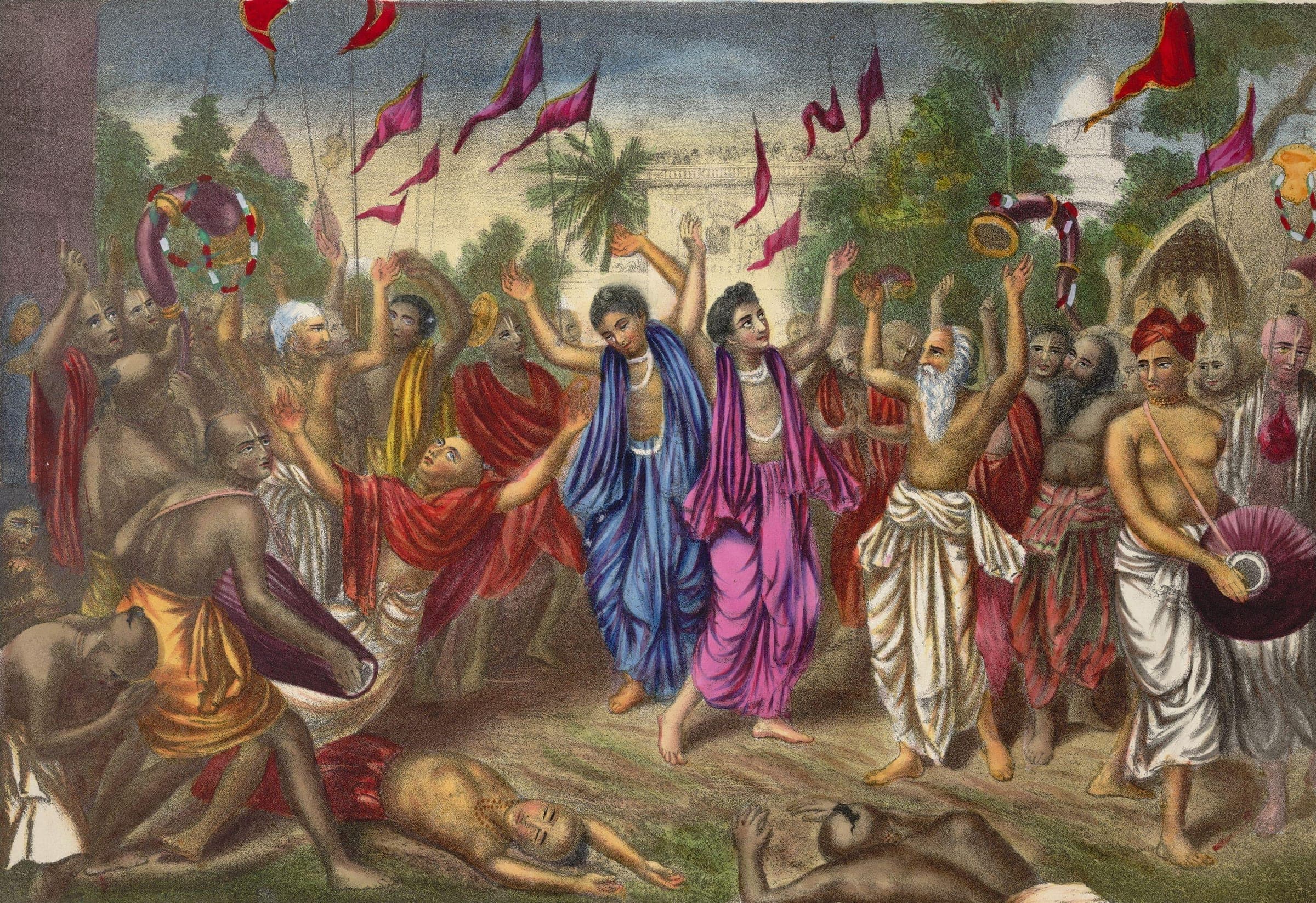
हरेर्नाम हरेर्नाम हरेर्नामैव केवलम् । कलौ नास्त्येव नास्त्येव नास्त्येव गतिरन्यथा ॥
The Name of Hari, the Name of Hari, the Name of Hari alone. In the age of Kali there is no other way, no other way, no other way.
Brihad-Naradiya Purana · sung by Sri Chaitanya Mahaprabhu
iii.Other traditions of walking devotion
Walking devotion is older than any one region of India and broader than any one lineage or sub-tradition. The practice appears under different names in many parts of the country, among Vaishnava, Shaiva and Shakta devotees, and among sants, yogis and householders.
In Tamil Nadu, the Alvars and the Nayanars
Between the sixth and tenth centuries, the twelve Alvars, devotees of Bhagavan Vishnu, and the sixty-three Nayanars, devotees of Bhagavan Shiva, walked from temple to temple across what is now Tamil Nadu, composing hymns. The Alvars’ verses are the four thousand Nālāyira Divya Prabandham, sung in Sri Vaishnava temples to this day. The Nayanars’ hymns form the first seven books of the Tirumūṟai. The Tēvāram of Sant Appar, Sant Sambandar and Sant Sundarar is the most-sung core, and Sri Manikkavāchakar’s Tiruvāchakam sits alongside it. The walking was not metaphor. It was the practice. Sri Andal, alone among the Alvars who was a woman, walked. Sri Manikkavāchakar walked, composing as he went.
In Karnataka, the vachanakaras and the Haridasas
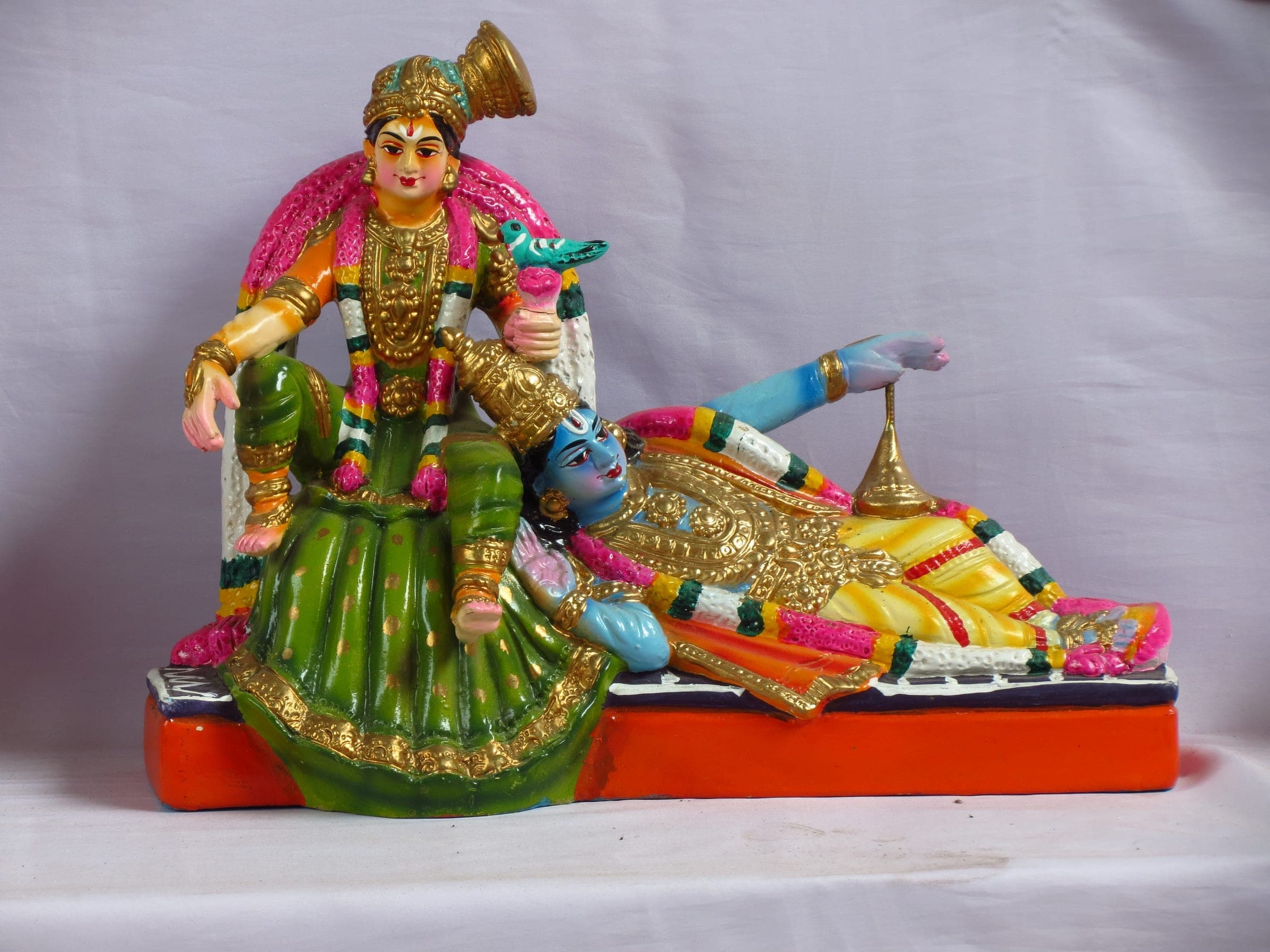
In the twelfth century, in the Kalyana of the Kalachuris, the Lingayat vachanakaras walked the streets of Karnataka. Sri Basavanna, Allama Prabhu, Akka Mahadevi. They refused caste, refused temple-as-property, carried the linga on the body and the vachana in the mouth. Akka Mahadevi walked away from a kingdom, in Kannada, toward Bhagavan Chenna Mallikarjuna. The compositions she sang are still sung. Three centuries later, in the same Karnataka, the Haridasas, Madhva-Vaishnavas walking devotion in the Dvaita key, moved through the streets of Vijayanagara (Hampi) and the towns of the south Deccan. Sri Purandara Dāsa, called the grandfather of Carnatic music, and Sri Kanaka Dāsa composed in Kannada the kīrtanas that are still sung today, on streets that pass near where our walks begin.
In Bengal, beyond the Sankirtan
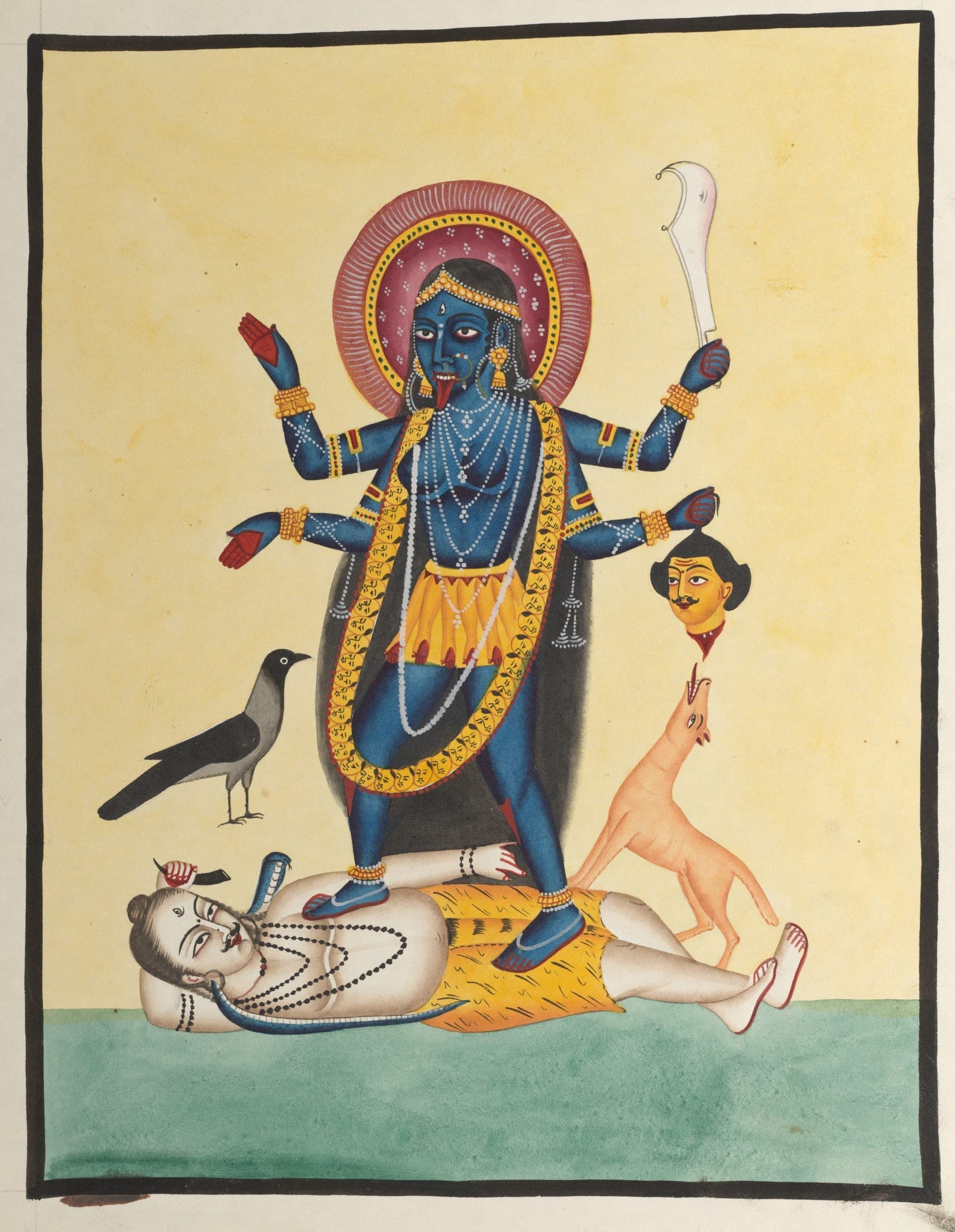
Bengal’s walking devotion is not only Vaishnava. The eighteenth-century Shakta Sant Ramprasad Sen walked Calcutta lanes singing Devi to Ma Kali, in his own padāvalī. Songs still sung at Kali Puja, in homes and on temple-yards from Tarakeshwar to Tarapith. Sant Kamalakanta Bhattacharya walked the same century in the same idiom. The Sankirtan of Sri Chaitanya Mahaprabhu in the north, the Devi-bhakti of Sant Ramprasad in the south of the same Bengal: walking, singing the Name, refusing to leave devotion behind a wall.
In the north, the sants
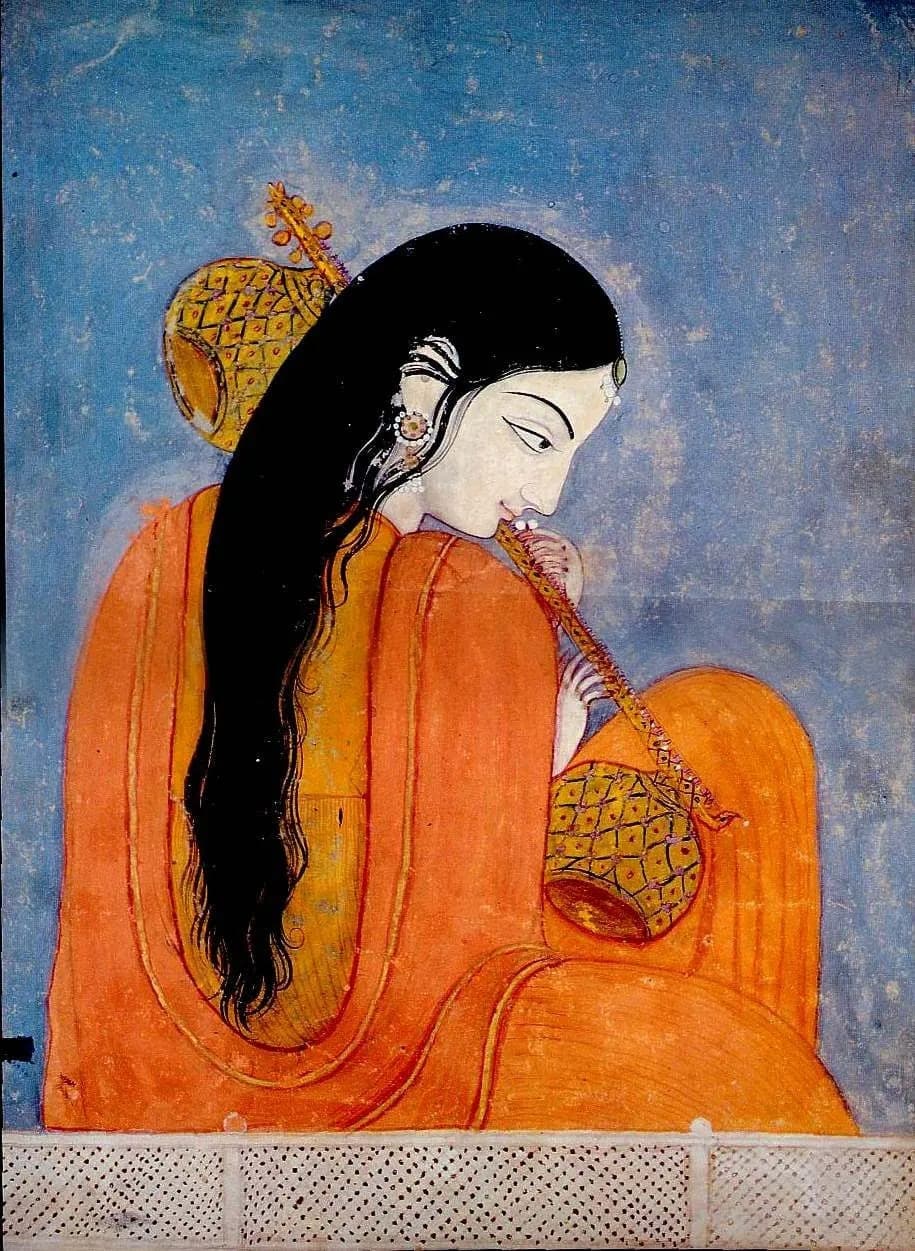
Sant Kabir walked, in fifteenth-century Banaras, between weaver’s loom and street, refusing to choose between his Hindu and Muslim listeners. Sant Mirabai walked, in sixteenth-century Rajasthan, away from a palace and toward Bhagavan Sri Krishna, composing in Mewari, Braj and Gujarati as she went, the languages of the road. Sant Surdas walked Braj, blind, in the Vallabha lineage. Goswami Tulsidas walked Awadhi across the Gangetic plain, from Ayodhya to Kashi, carrying the Rāmacaritamānasa. None of them founded an order. None of them registered a name. The verses are sung today by walkers who could not necessarily tell you where the singer was buried.
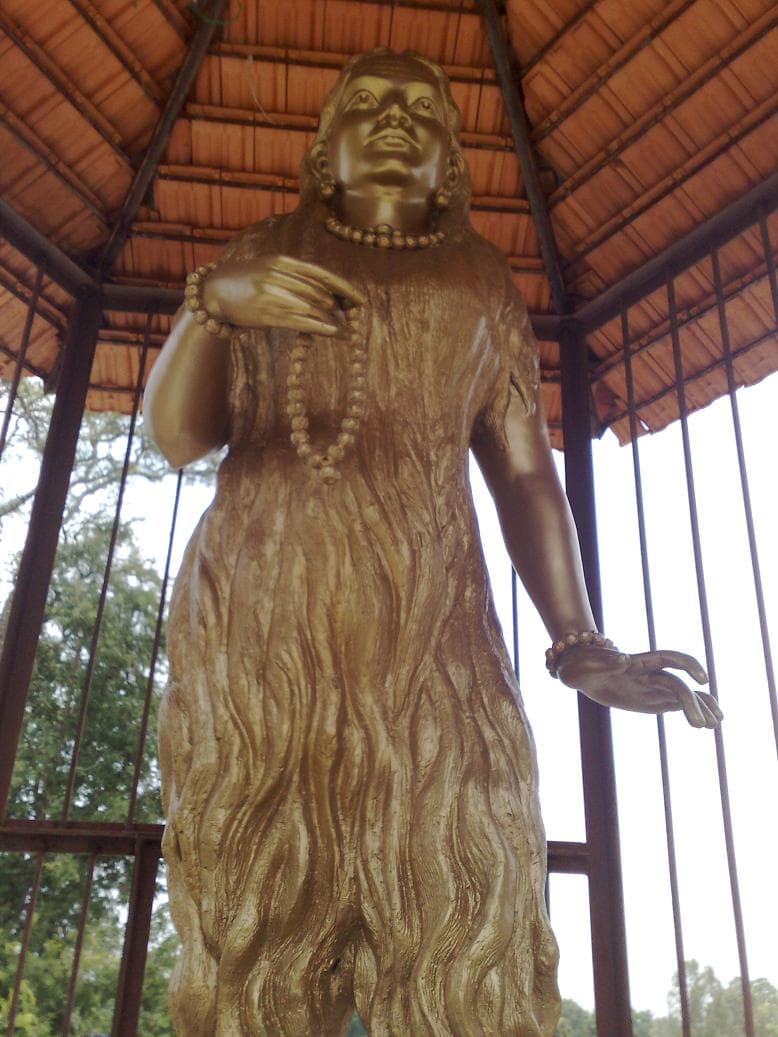
The traditions differ. The cadence differs. The deities differ: Sri Vitthal and Mata Rukmini, Bhagavan Sri Rama, Bhagavan Sri Krishna, Bhagavan Shiva on Tiruvannamalai’s hill, the Devi at Kamakhya, Bhagavan Murugan on his six hills, Sri Andal’s Bhagavan Vishnu, Sant Mirabai’s Giridhar, Goswami Tulsidas’s Ramji, Akka Mahadevi’s Bhagavan Chenna Mallikarjuna, Sant Ramprasad’s Ma Kali. Their forms and teachings differ, but all of them show that walking and singing have long been part of public devotion in India.
मेरे तो गिरिधर गोपाल, दूसरो न कोई । जाके सिर मोर मुकुट, मेरो पति सोई ॥
Mine is Giridhar Gopal; no other is mine. He of the peacock-feather crown is my husband.
Sant Mirabai · sixteenth-century Rajasthan
iv.Why walking
The walk brings devotion into the shared street. Anyone may walk alongside for any length of time and leave without any formality. People on the street may also pause, fold their hands or pray as the murti passes.
The group walks slowly and takes care not to obstruct traffic.
The outer practice also reminds us of the inner presence of God. Sant Tukaram Maharaj, the householder-poet of Maharashtra, said it plainly: हृदयीं वसे विठ्ठल. Sri Vitthal dwells in the heart. Sant Kabir, over a century earlier, expressed a related teaching: मोको कहाँ ढूँढे बन्दे, मैं तो तेरे पास में। ना तीरथ में ना मूरत में, ना एकान्त निवास में। Where do you seek me, friend; I am beside you. Not in pilgrimage, not in the image, not in solitude alone. Bhagavan Sri Ramana Maharshi, closer to our own time, located the hṛdaya, the heart, two finger-breadths to the right of the centre of the chest, and called it the seat of the Self. These teachings use different language, but each directs attention towards the Divine within. The murti and singing on the street help walkers and passers-by remember that inner devotion.