īśāvāsyam idaṁ sarvaṁ · yat kiñca jagatyāṁ jagat
All this · whatsoever moves on the earth · is enveloped by the Lord.
Īśā Upaniṣad · 1
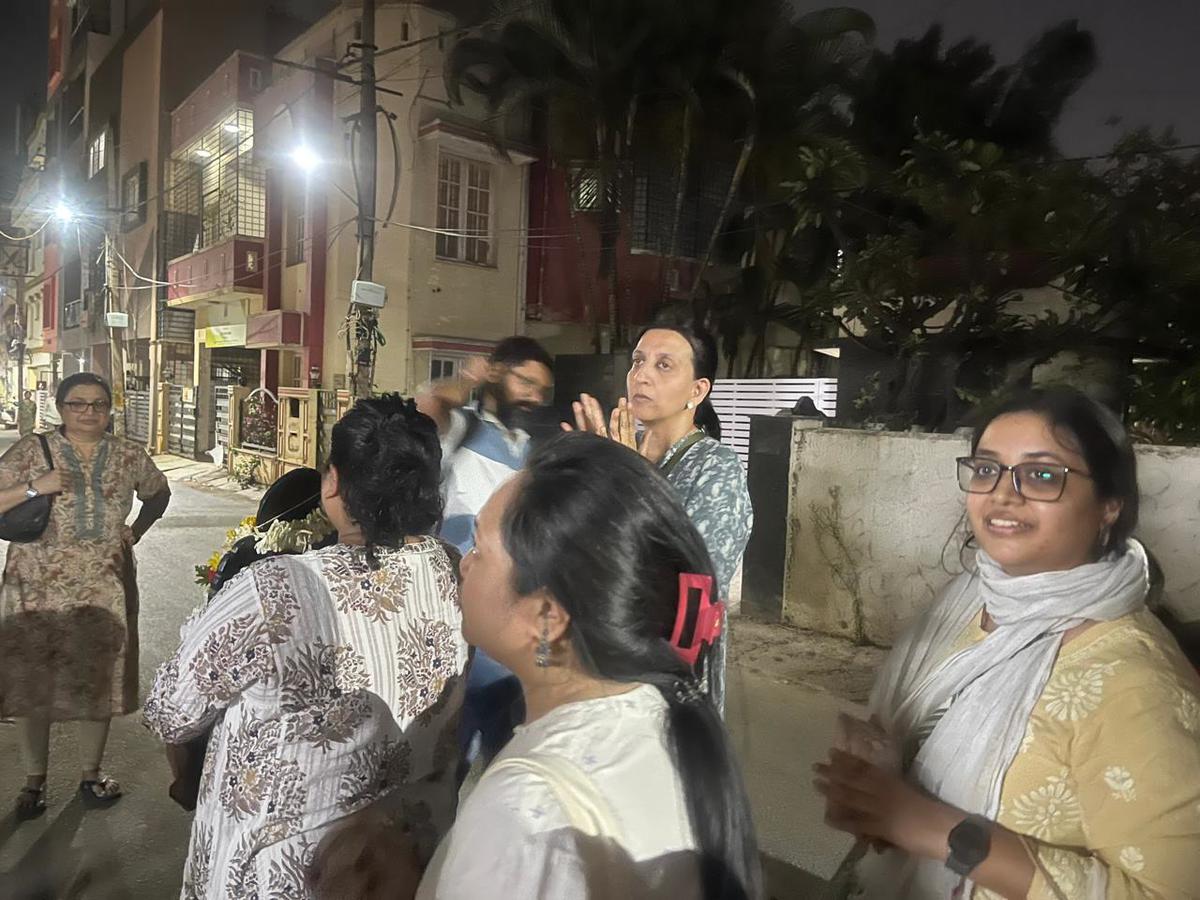
A small group carries a murti through a city street while softly chanting God’s name, and ends at a local temple. The walks so far have had around fifteen people. Any neighbourhood can follow this simple practice without paying a fee or joining an organisation.
What a locality needs
To start a walking temple in any town, a few things are needed. Someone to carry the murti. A small group willing to walk slowly alongside; there is no minimum number. One street that is safe at the chosen hour. A willingness to sing softly. There is no building, certification or fee. A locality may begin when it has a few willing people and a safe route.
What walking does in public
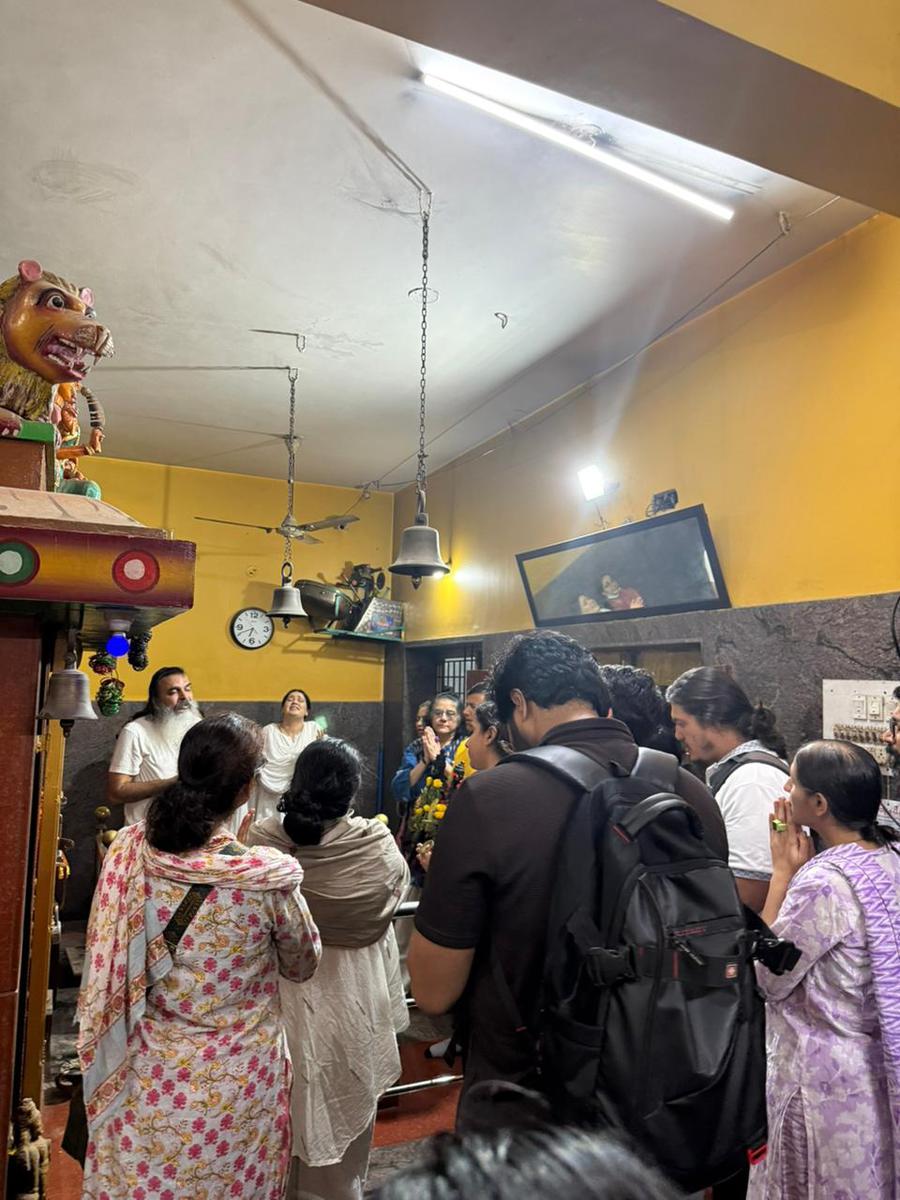
We can only describe what we have seen on these walks. Walkers slow down, because the pace is unhurried and the singing sets the breath. People who arrive distracted by the day settle within a few minutes. Walking together also takes the edge off being alone. None of this is a state anyone has to attain. It is what the practice tends to offer to whoever shows up.
People on the street may also respond. An auto-rickshaw driver folds his hands and gets back in his auto. A child watches from a balcony. A woman selling jasmine looks up. These brief responses give people an opportunity to remember God during an ordinary day.
The deity is the walkers’ choice
The Walking Temple is a bhakti practice. The shape of the walk is the same everywhere it is taken up: a small group walks slowly through a neighbourhood, carries a murti by hand, sings devotional songs, and ends at a local temple. What the practice does not fix is which murti is carried. Each group walks with the deity its own members worship. The Bangalore walks have carried Sri Vitthal and Mata Rukmini; a group in another place would carry whatever form of God it has gathered around, often a murti from a member’s home shrine.
This applies in India and in the diaspora. Each group chooses its own murti while following the same basic practice of walking, singing and ending at a temple.
What the practice does not have
The practice has a few simple limits so that it can remain open and independent.
The walks are free. The name is not registered as a trademark; anyone may use it, change it, or call their walk something else. There is no organisation, no board, no central office, and no certification for hosts. Photographs and video are taken by walkers on their phones; there is no camera crew. Each locality manages its own walks.
These choices come from what has happened to other devotional movements. Many lost their way within two generations once money, central authority, or a single owner entered them. The Varkari tradition has walked to Pandharpur for seven hundred years without a central authority, without enforced doctrine, and without paid clergy; its dindis are independent and its lineages are many. The Haridasas of Karnataka, the Alvars and Nayanars of Tamil Nadu, and the sants of north India did not register an order or name successors. Their songs are still sung.
One sentence holds it together:
“This practice is meant to last by staying free, on foot, and in public.”
What this could become
The practice may take different forms in different places.
· In ten years ·
Local groups could be walking in several Indian cities. Some may walk weekly, some monthly and some on festival days. Each group could carry its own ishta devata and sing in its local language.
· In a hundred years ·
Families and neighbourhood groups in India and abroad could continue the practice in their own way. They may carry different forms of God and sing different devotional verses, while keeping the walk free and locally organised.
The long-term hope is that many towns will have local groups, some walking weekly, some monthly and some only on special occasions. There is no numerical target.
And the household
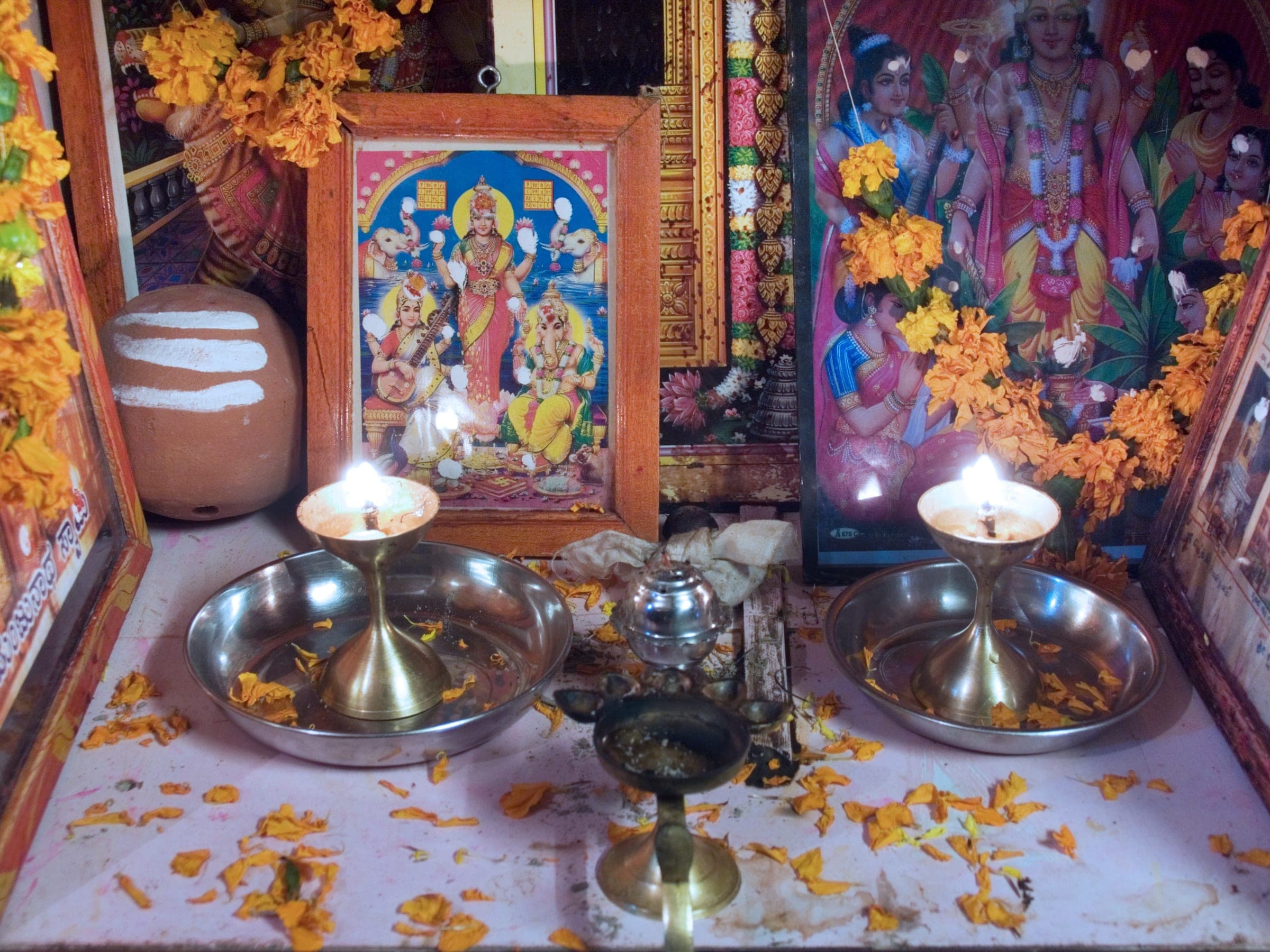
This has not yet been tried. One possibility is for households on the same lane to walk together on an Ekadashi, a festival evening or another suitable day. Participation would remain voluntary.
This household form may develop slowly as local groups gain experience.
Leadership and succession
One person began the first walk in Bangalore on 22 April 2026. The practice should not remain dependent on one founder. Hosts should share responsibility and allow other walkers to lead as soon as they are ready.
The next walk in Bangalore will be a small group walking under the old trees toward a local temple they have walked to before. The group will walk slowly and sing softly.
If you can find a few companions, a safe street and a free evening in your town, you may begin a walk. The Start a Temple page gives the practical details.
every town · eventually every household