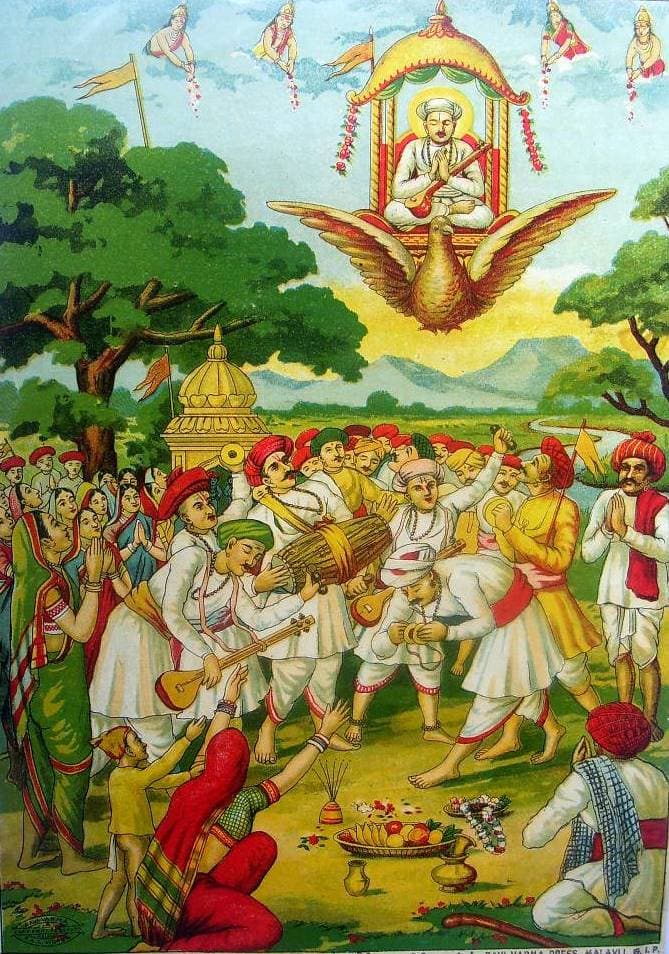
saguṇa nirguṇa doniḥī viṭhāī jhālā
Saguṇa and nirguṇa · both became Viṭhobā.
Sant Tukārām Mahārāj · abhang
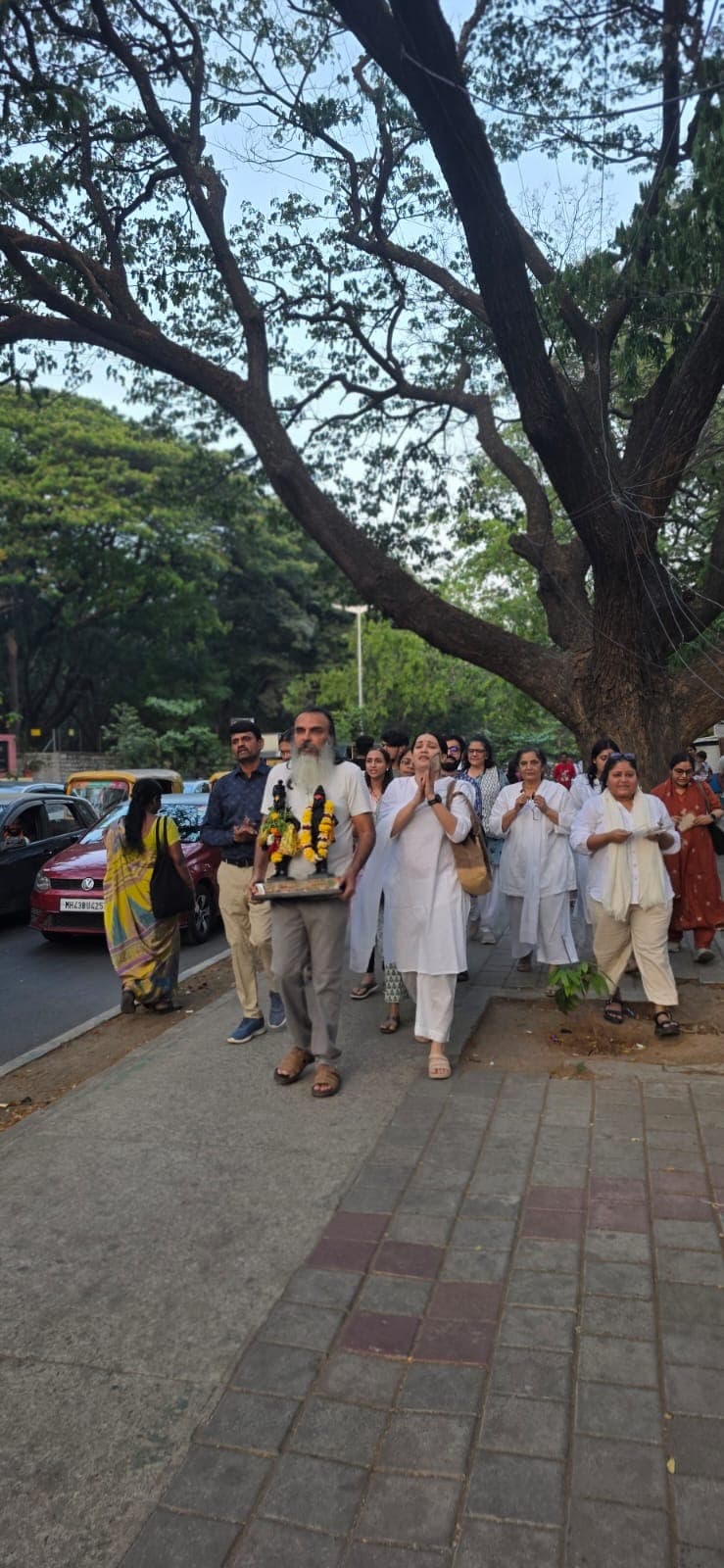
On 16 April 2026, fifteen people walked from Old Airport Road in Bangalore. They did not carry a murti. They sang short devotional songs that passers-by could easily join. No public invitation had been sent.
Ananta had shared satsang since 2012. Over those years, he felt that devotional practice should be lived and shared, not only discussed. The sants had once carried devotional songs into the streets on foot. This walk began as a small attempt to continue that practice.
One week later, on 22 April 2026, the group walked again from the same place. This time two small murtis came with them: Sri Vitthal of Pandharpur and Mata Rukmini, garlanded that morning in a home in Indiranagar. The walk that evening set the pattern that has held since.
A few lines we walk with. From those who walked before.
हेचि दान देगा देवा । तुझा विसर न व्हावा ॥
This boon alone grant me, Lord: that I never forget You.
Sant Tukaram Maharaj
सगुनहिं अगुनहिं नहिं कछु भेदा । गावहिं मुनि पुरान बुध बेदा ॥
Between saguna and nirguna there is no difference: so sing the sages, the Puranas, the wise, the Vedas.
Goswami Tulsidas · Ramcharitmanas
श्रवणं कीर्तनं विष्णोः स्मरणं पादसेवनम् । अर्चनं वन्दनं दास्यं सख्यमात्मनिवेदनम् ॥
Hearing, singing, remembering Vishnu; serving the feet, worship, prostration, servitude, friendship, complete self-offering.
Sri Prahlada · Bhagavata Purana 7.5.23-24
The walk keeps a small reminder of God on the street for one more evening, open to anyone passing by.
How passers-by responded
The group walked more slowly than the surrounding traffic. The first few minutes felt awkward. As the singing continued, the walkers became more comfortable with the pace.
Several passers-by stopped as the group went past.
A young woman on a scooter stopped and folded her hands while the light was still green. A shopkeeper came out of his shop holding a small child and lifted the child’s hand in namaste. A family on the footpath, walking the other direction, stopped together as if they had practised. A man in office clothes crossed three lanes of traffic, on foot, between moving cars, to touch the edge of the wooden platform and walk away without saying a word.
A flower-seller, on two evenings. The first time, as the walkers passed her stall, she lifted a small bunch of marigolds from her tray and offered them to the murtis without being asked, and would not accept anything for them. The second time, when the walkers had stopped at her stall to buy, she folded the marigolds back into their hands and again would not take payment. “For God,” she said. “Not for the walk.”
And then the one that everyone who walked that evening remembers. An auto-rickshaw driver pulled to the side of the road, stepped out of his vehicle, and bowed, once, deeply, before getting back in.
None of these passers-by had been invited or had come looking for the walk. The murti and singing gave them a brief opportunity to pause and pray.
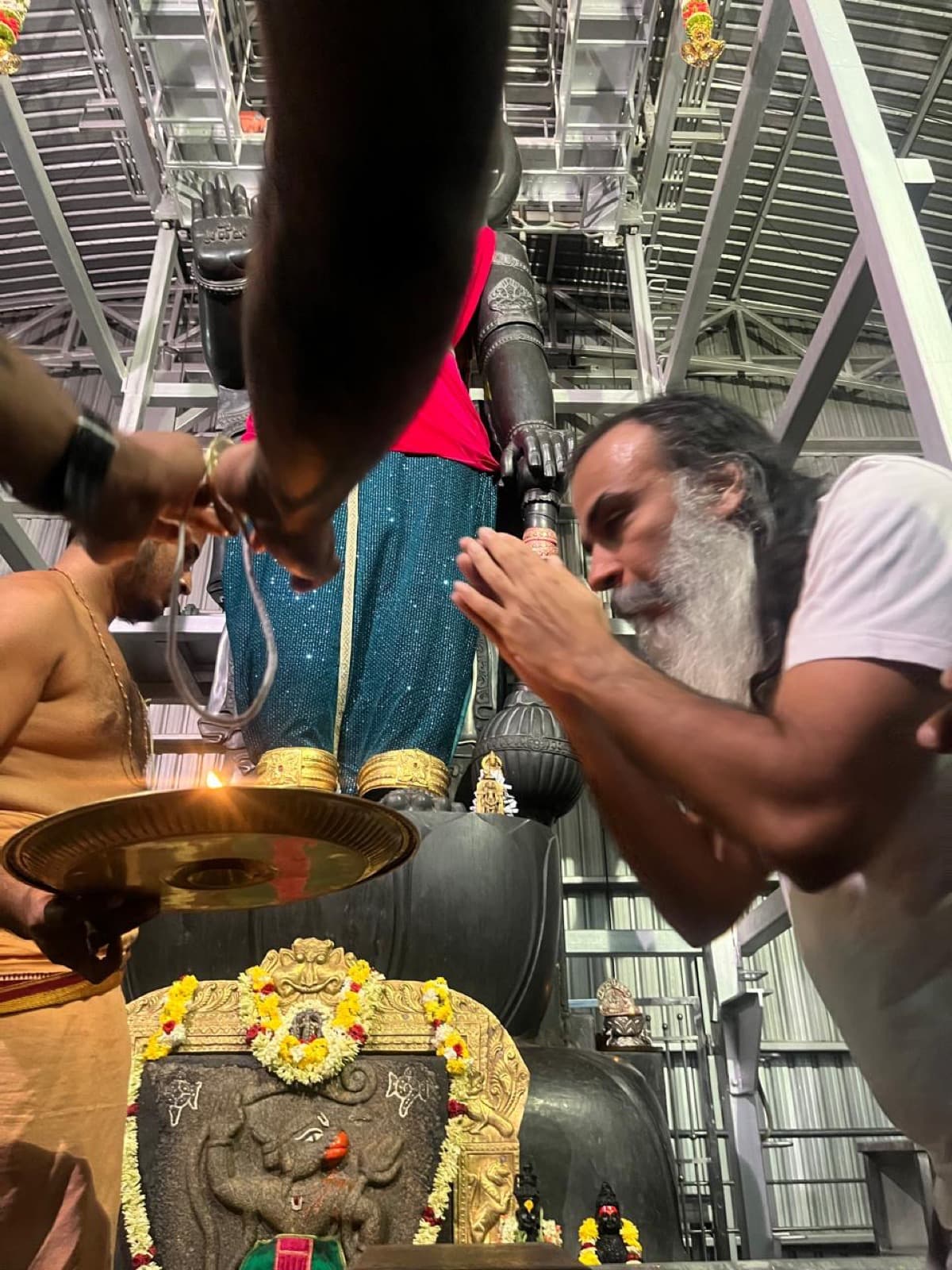
What the walkers understood
The walkers understood that many people on the street were already willing to pause for prayer. The walk gave them an unexpected opportunity to do so.
In the group’s view, daily busyness can make remembrance difficult, but it does not show a lack of devotion. A garlanded murti and a softly repeated song can give people a brief moment to turn towards God.
What we decided afterwards
The first walk was anchored by Ananta. When the walk ended at the temple, several of the walkers understood, without saying so, that this was something they wanted to keep doing.
The group agreed on a few principles. The name would not be trademarked, and anyone could begin a walk. The walks would remain free. There would be no central organisation. Each locality would have its own anchor, meeting point, WhatsApp group, and schedule. The practice should not depend on Ananta’s name or continued involvement.
No journalists were told. No press release was sent. This page is the only place this story is written down, and that felt like the right shape for the beginning.
Who walks
The walks are anchored by Ananta, who has shared satsang since 2012. The older talks are at anantasatsang.org, in his own voice.
The practice belongs to no one. Anyone, in any city, may begin one. The walks are free. There is no fee, no list, and no membership. The locality, not the city, is the operational unit. Each locality has its own anchor when one emerges, its own meeting point, its own WhatsApp group, and its own rhythm.
Only a few things are asked of a walker: walk slowly, sing softly, treat the murti with care, and leave quietly if you must leave.
What walkers have written
After the first walks, several walkers posted reflections in a private group. Two anonymised excerpts are included here with permission because they record how the practice developed.
The first day, I did not have the courage even to look at the people on the streets. By the end of the first walk, some courage had come, and some comfort. The second walk was completely different. There was great joy in singing for God on the streets. There was much less concern about who was looking.· a walker, second week ·
Several walkers described a similar change in self-consciousness. The following week, another walker wrote about the physical feeling of it:
When a self-concern thought came and I bought it, my voice went feeble and my body felt constricted. When I did not buy those thoughts, I sang loudly and danced too. It is quite an experience.· a sister, third week ·
The walking is one practice among many. It is not for everyone, and it does not need to be.
More of what the walkers are writing is collected on the what it feels like page.
I am only carrying what was placed in my hands. May He keep me small enough to keep carrying it.
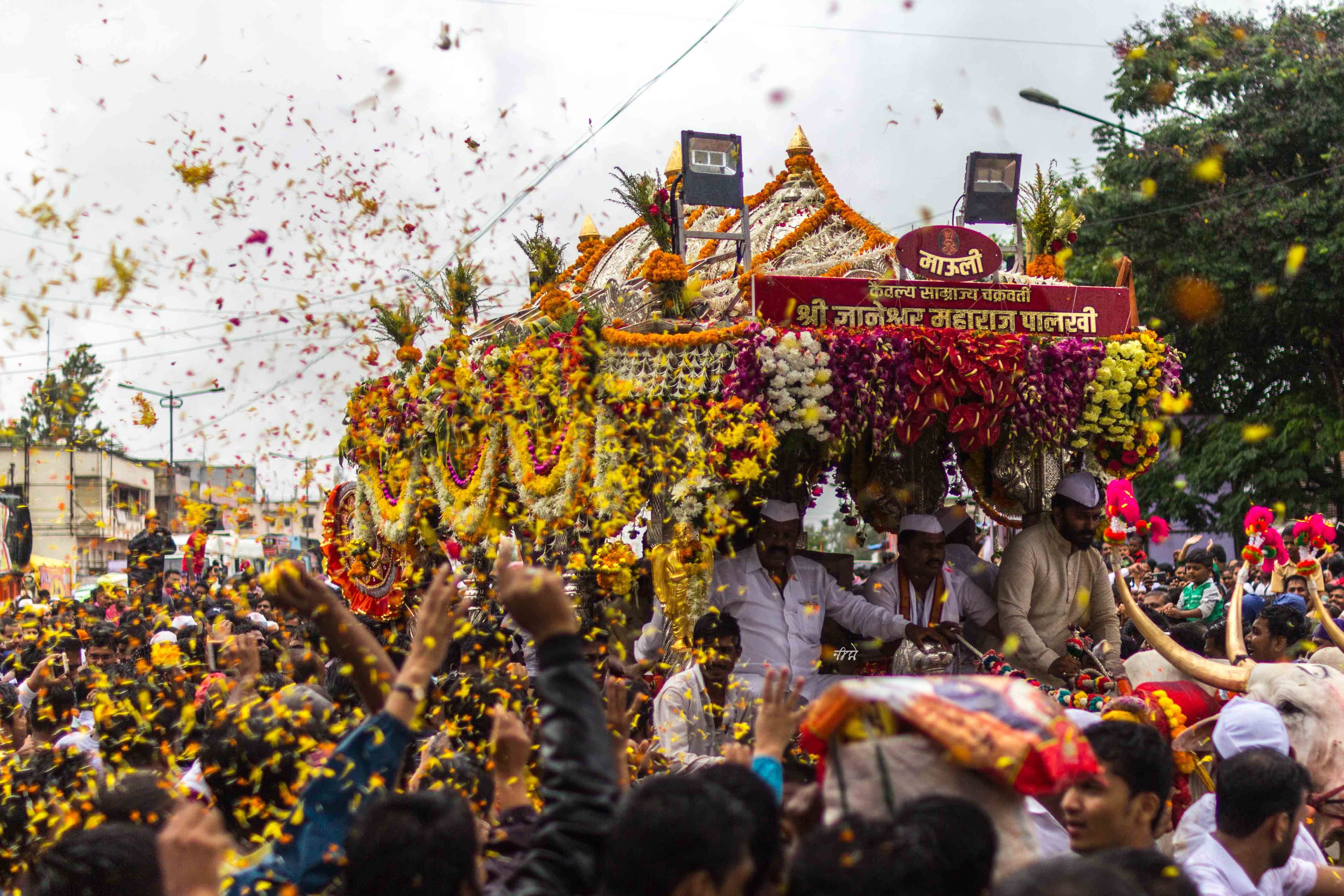
The tradition behind the practice (the Varkari padyatra, the Sankirtan, the songs of the Alvars and Nayanars, the vachanas of the Lingayats, the abhangs of the Haridasas, the verses of the sants of north India, the padāvalī of the Shakta Bengal) is set out on its own page.
The vision for independent neighbourhood walks is set out separately.
The Journal keeps a photographic record of the walks themselves.