The Walking Temple.

Folio III · 13 May 2026

Bangalore · Old Airport Road

Carried · Vitthal and Rukmini

Bangalore walk cover photograph

The third walk was a walk of feet.

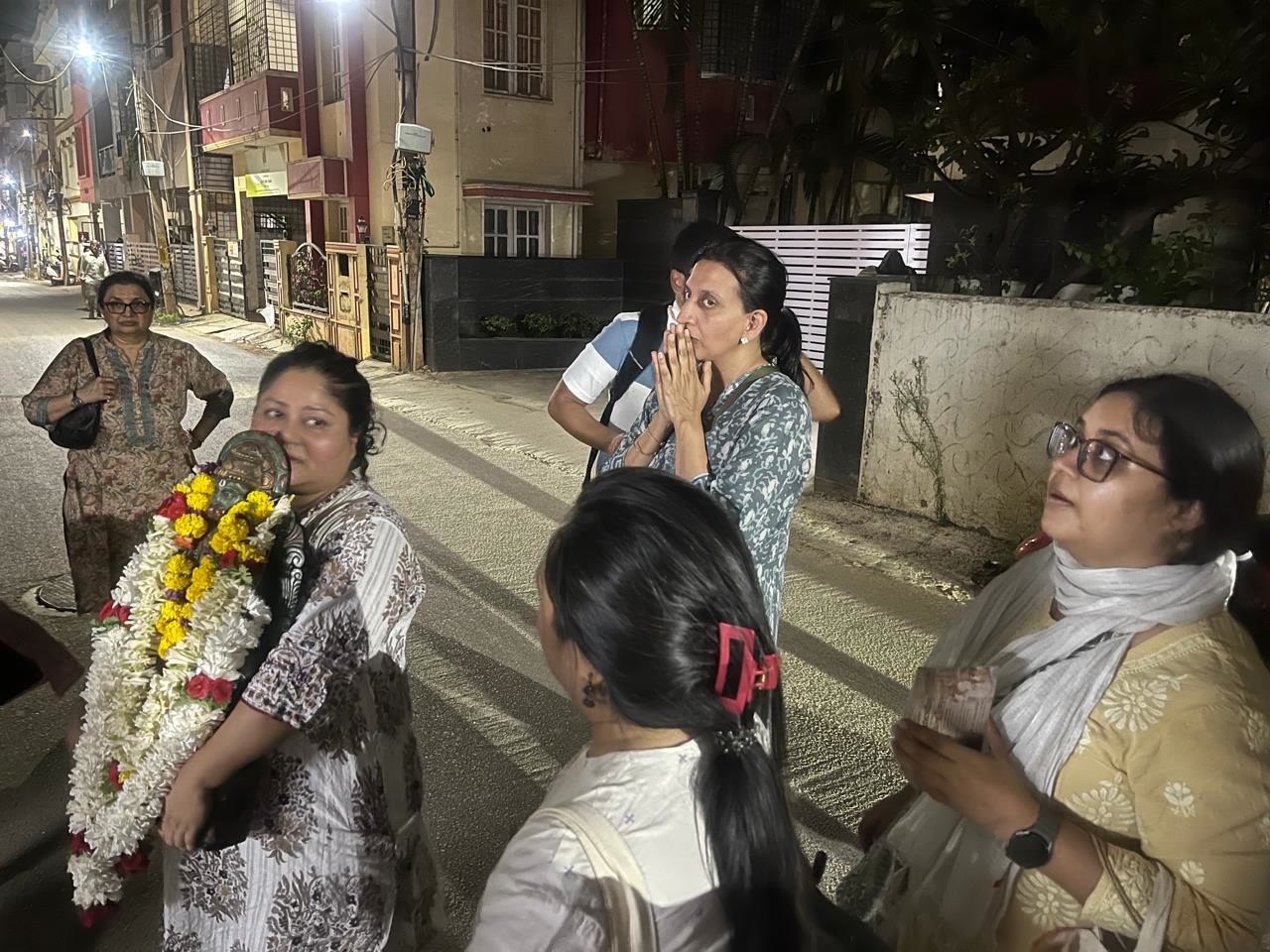
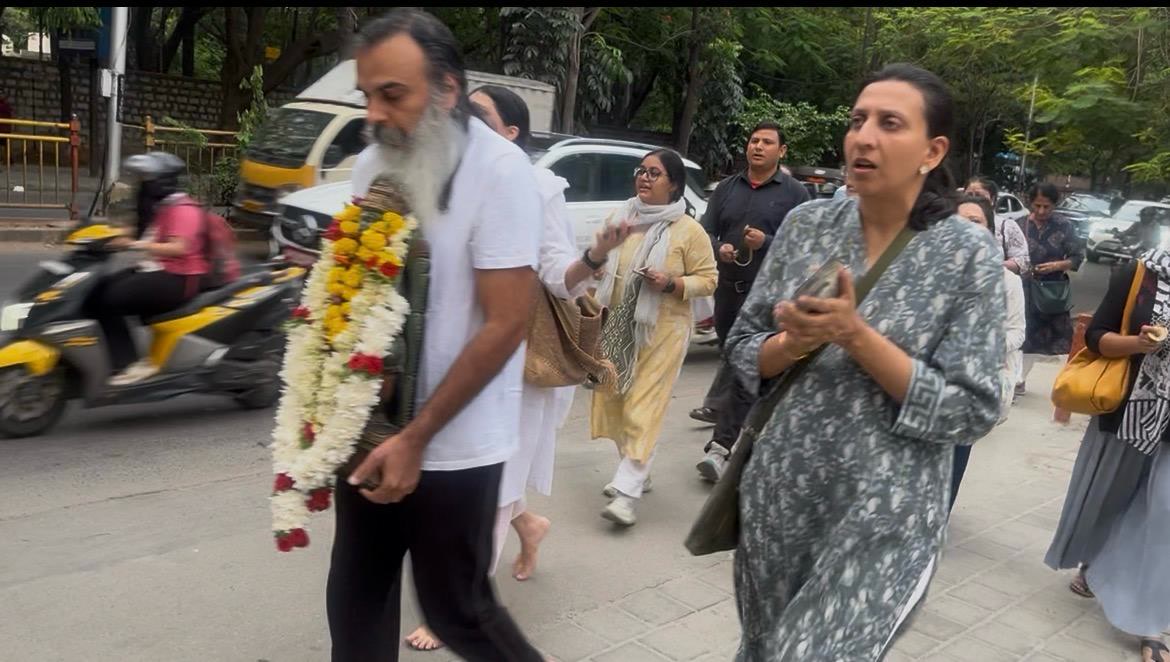
The anchor arrived without shoes. None of us had asked him to; he stepped off the kerb that afternoon with the murti held at his chest and walked on the asphalt the way the asphalt is meant to be walked on. Slowly, attentively, without performance. Two of the women behind him quietly slipped off their own sandals before the first block was over.

We walked Old Airport Road again, but the road had changed. The week before had felt like a discovery. This week felt like a return.

Three shrines, one walk

The route had been mapped not by us but by what was already there.

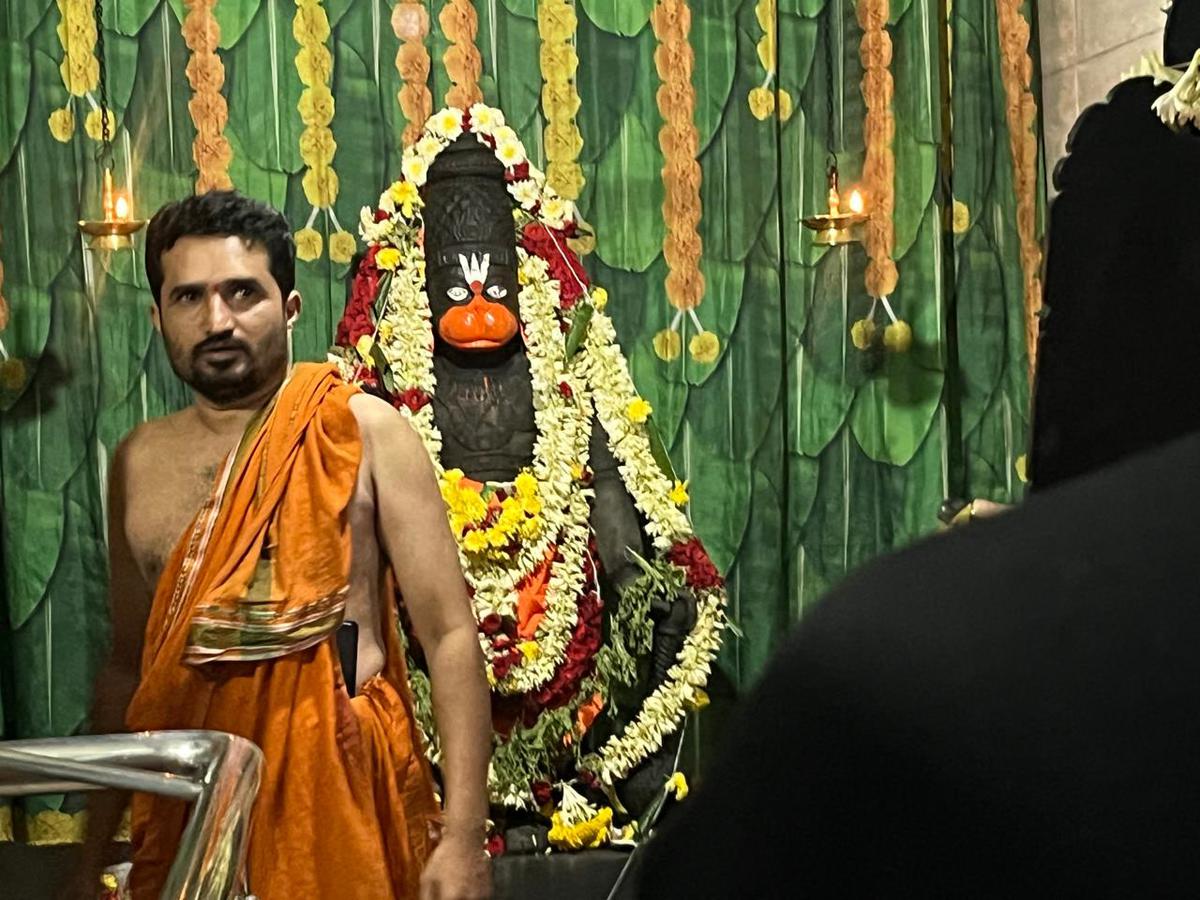
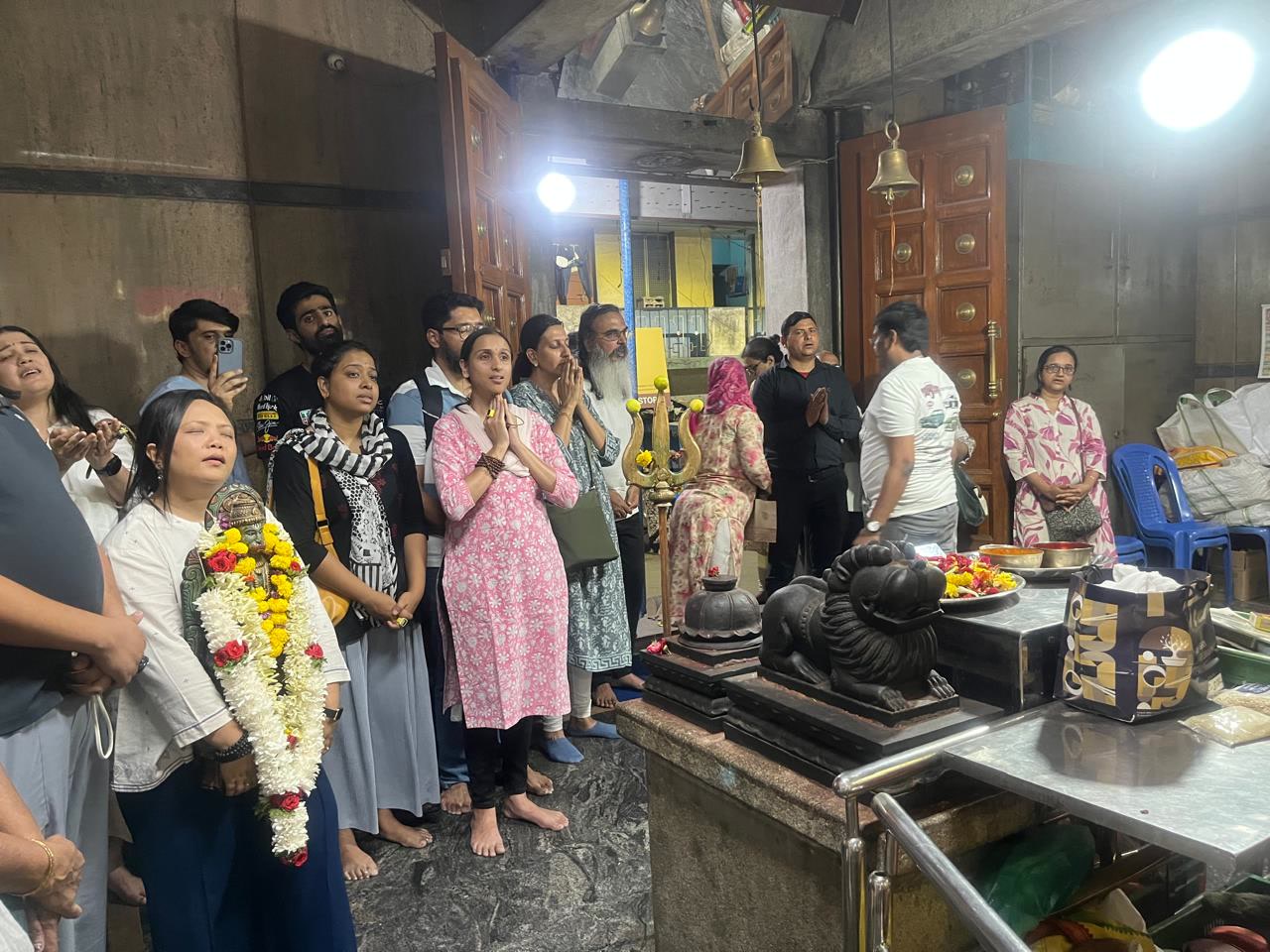
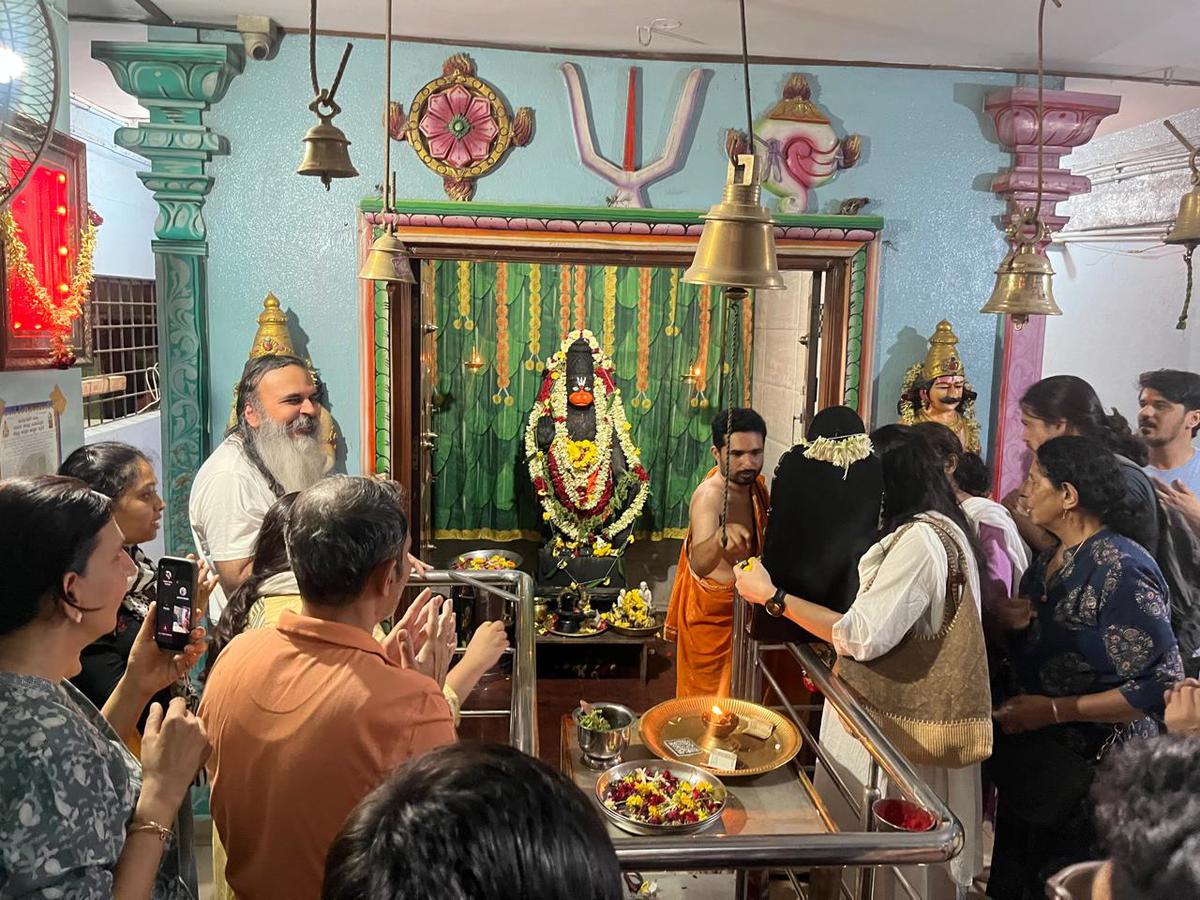
We stopped first at the Hanuman shrine off the side road, a small temple with a vermillion-faced Hanuman almost entirely buried in marigold and rose. The priest, in saffron, took the household murti from the anchor's hands and held it briefly against Hanuman's chest, garland to garland, the way an aunt holds a child up to an uncle. Then he gave it back, and we walked on.

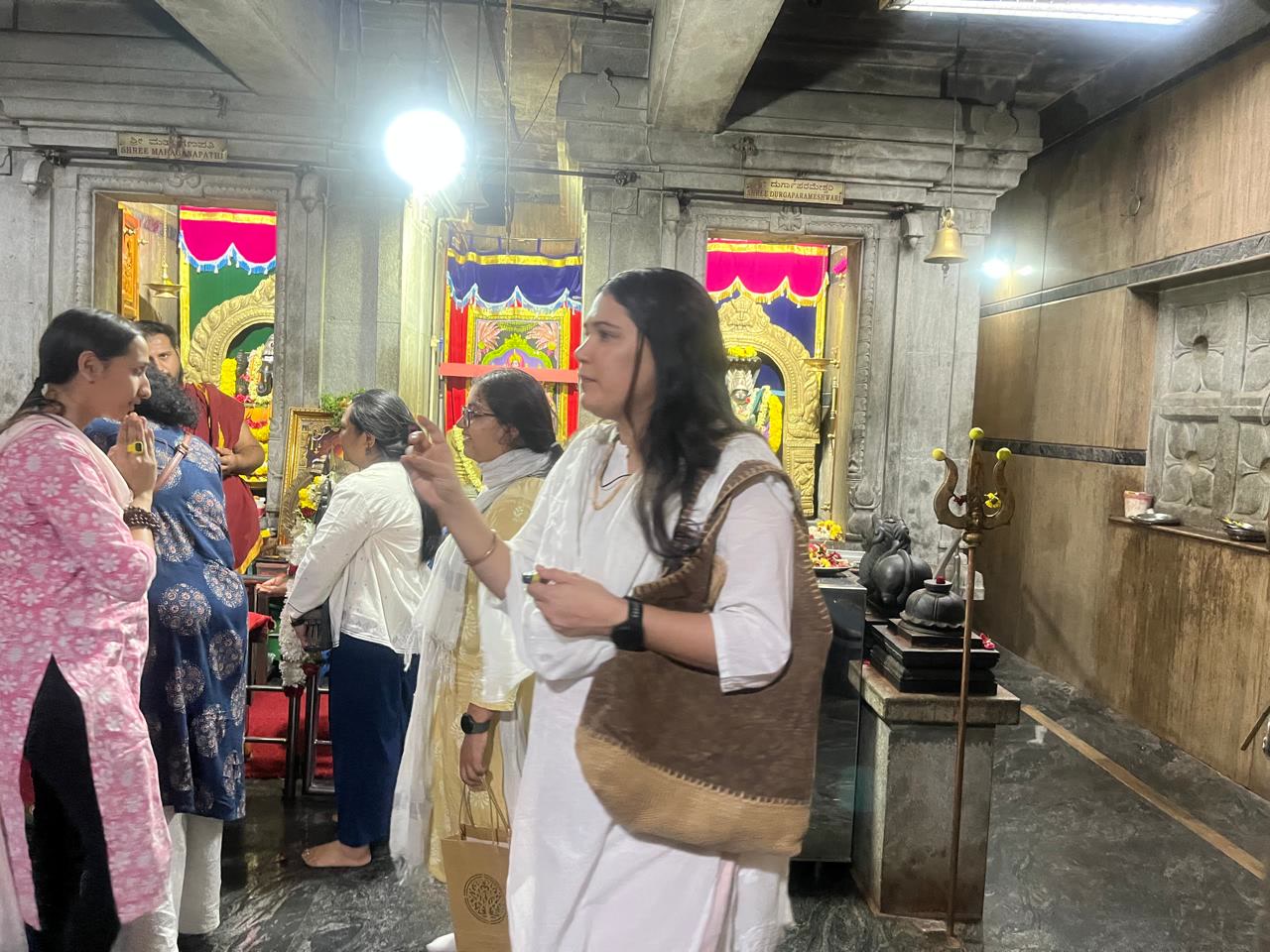
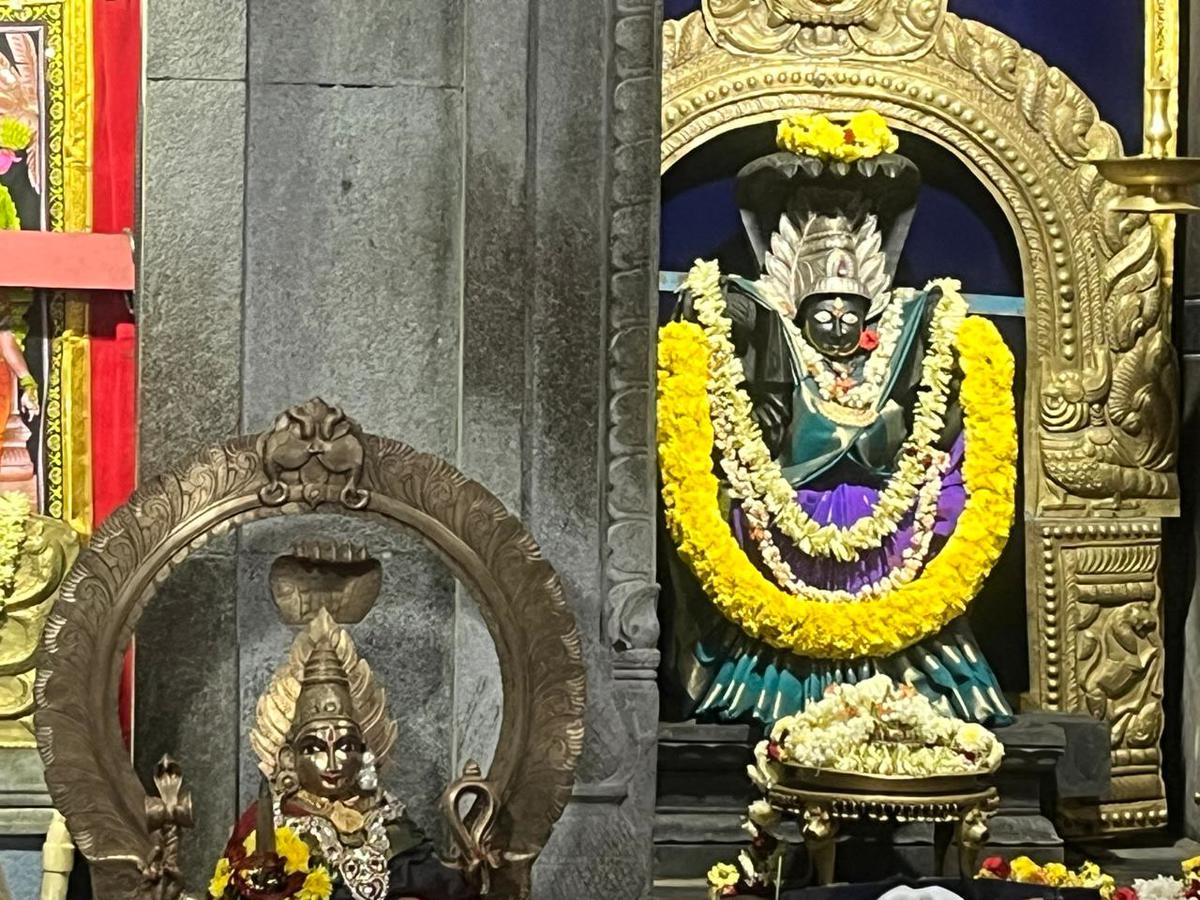
The second stop was the Devi shrine, where Mahalakshmi sat behind a smaller Vishnu in an arch of beaten brass. We did not stay long. A woman in the doorway said come back on Friday and we promised we would, knowing we would not.

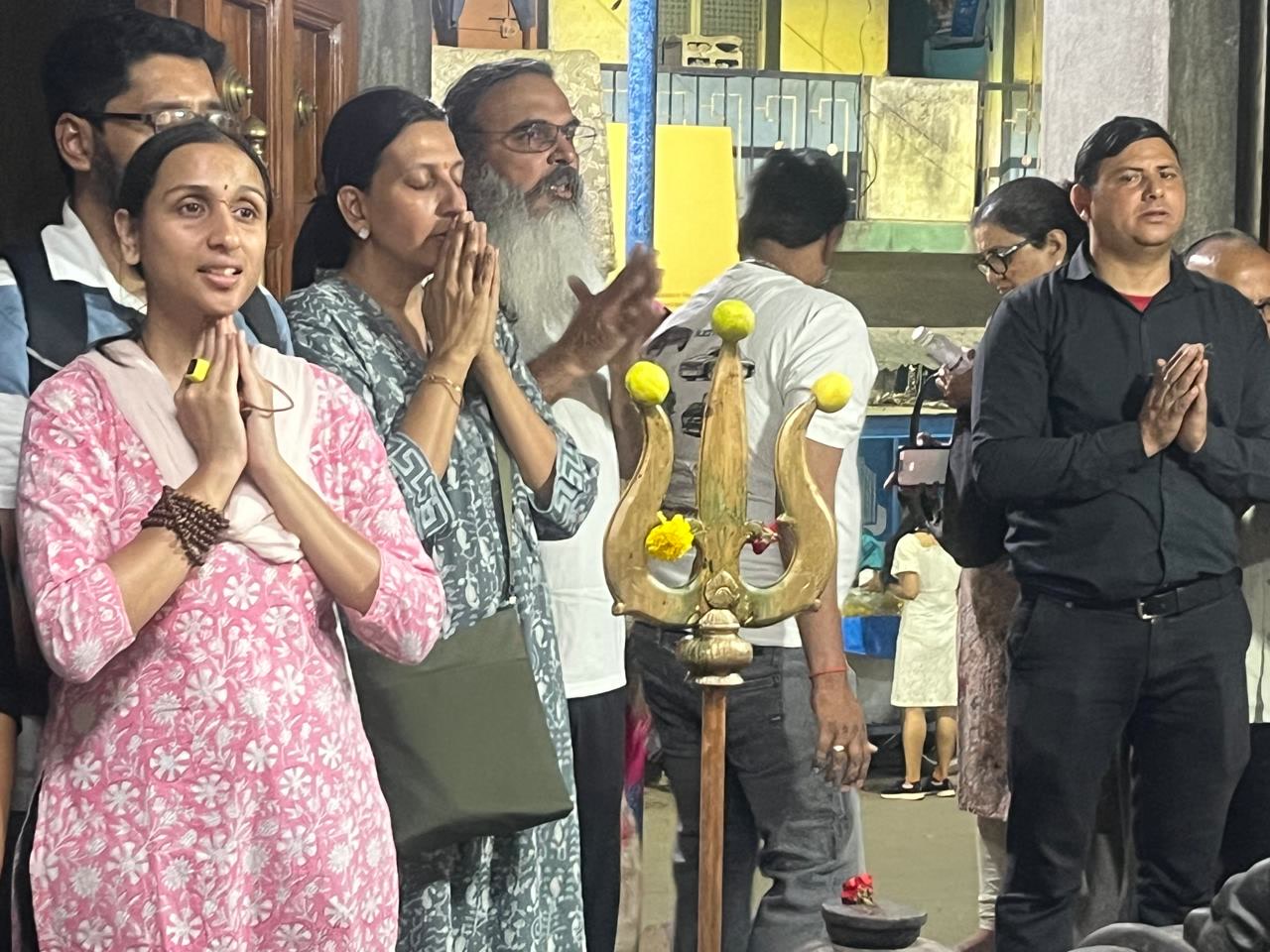
The third was a Shiva temple near the end of the road, with Nandi watching the entrance and a Shivaling we could feel rather than see. We did kirtan inside for a few minutes, quietly, because the temple was quiet, and the Walking Temple does not insist on its own volume.

What the barefoot walking did

I had not understood, before this, how much of city walking is padding. The shoe is a small lie we tell the road. It is a polite lie, a useful lie, but it is a lie.

The road is hot. It is not, generally, dangerous; there is broken glass perhaps four times a kilometre, and a sensible walker steps around it. But it is hot, and the heat is part of the body's information about where the body is. You cannot walk barefoot down Old Airport Road and pretend you are somewhere else. You are exactly there. The murti, suddenly, is also exactly there.

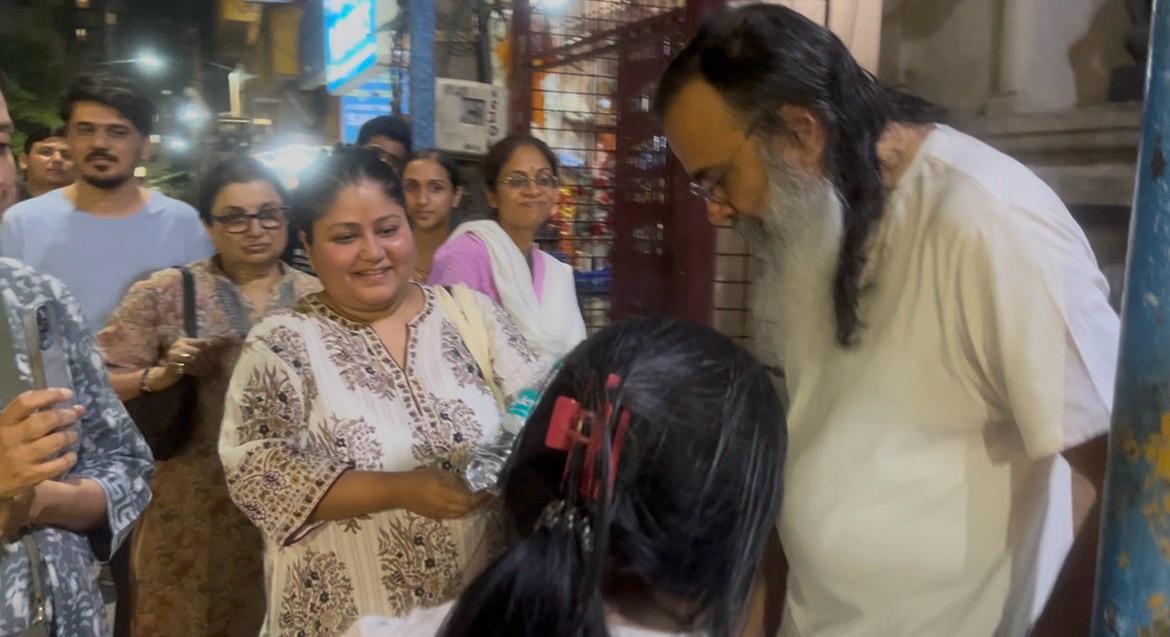
Several strangers stopped to ask if we had blistered. A man at a tea stall ran inside and came out with a small steel tumbler of water, which he pressed into the anchor's hand. The walking was both more uncomfortable and more friendly than the previous weeks. It is hard to tell whether the two things are connected.

A young man with a garland

Outside the Devi shrine, a young man we did not know waited for us, wearing a large white-and-marigold garland of his own. He had heard about the walk somewhere; he had brought a garland for the murti; he had wanted to walk a single block, just to know what it felt like.

We gave him the marigolds to hold while the anchor spoke with him. He laughed and said he was scared. He walked the block, then two blocks, then the rest of the way. By the Shiva temple, he had taken the cymbals from one of the women and was singing in a thin, slightly off-key voice that was, by then, the best voice on the walk.

What I am beginning to see

A temple is not a place to which one travels. A temple is a place which travels to you.

The first walk taught us that the city is ready. The second taught us that the shopfronts are ready. The third taught us, quietly, with the soles of our feet, that the shrines along the road are not destinations. They are companions. They are stations of attention on a route that is itself the temple.

Jai Shri Ram. Jai Vitthal. Jai Rukmini.

Photographs from the walk

Bangalore walk photograph 1
Bangalore walk photograph 2
Bangalore walk photograph 3
Bangalore walk photograph 4
Bangalore walk photograph 5
Bangalore walk photograph 6